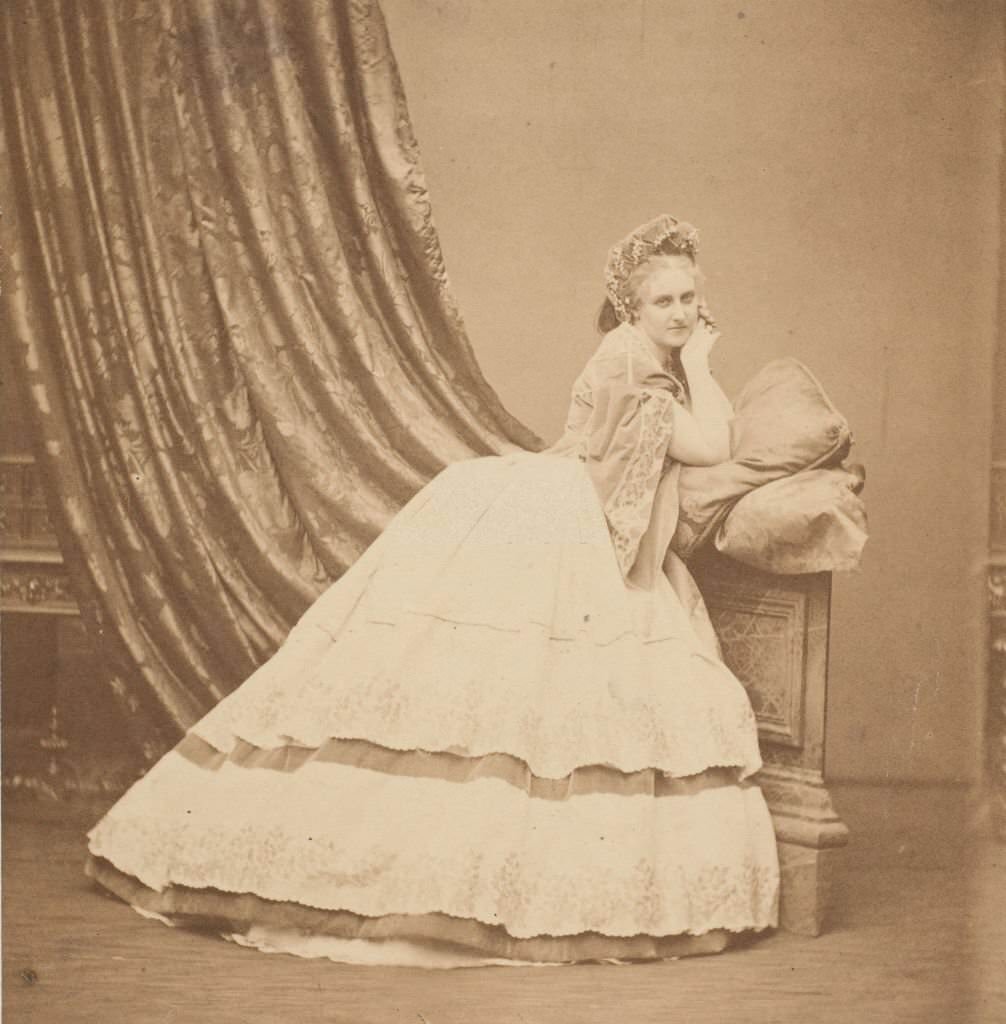
Draped studio cloth falls in heavy folds behind a young woman posed in the unmistakable silhouette of the 1860s, her crinoline skirt spreading outward in tiered layers that almost become part of the set. She leans into a stack of plush cushions atop a carved pedestal, one hand lifted to her cheek, meeting the camera with a calm, practiced composure. The soft, sepia tone and gentle blur at the edges lend the scene a private, parlor-like hush.
The title, “The Velvet Case,” hints at the object that once protected this portrait—an albumen print or similar keepsake tucked into a velvet-lined case, meant to be handled, shown, and treasured. That kind of presentation suited the era’s appetite for refinement: elaborate textiles, ornamental furniture, and carefully arranged poses all served as visual proof of taste and respectability. Even without a named sitter or stated place, the photograph speaks the language of mid-19th-century studio photography, where backdrops and props helped transform a brief sitting into a lasting statement.
Fashion and culture intertwine here in the architecture of the dress itself: the airy breadth of the skirt, the lace-edged tiers, and the delicate headpiece frame a look built as much from structure as from fabric. Crinolines were more than a trend—they shaped movement, etiquette, and the way women inhabited interiors, expanding the personal space a body could claim. For modern viewers searching for 1860s women’s fashion, Victorian portraiture, or crinoline dress history, this image preserves a moment when clothing, photography, and aspiration were stitched tightly together.