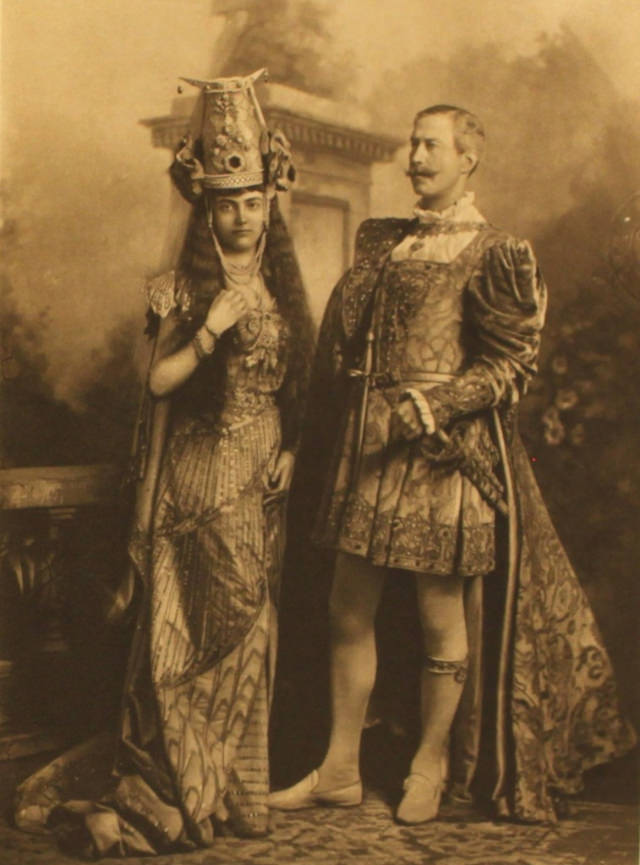
In a studio setting softened by painted columns and theatrical haze, Mrs Maguire appears as Dido, Queen of Carthage, wearing a towering, sculptural headdress and a long veil that frames her face and falls over richly patterned fabric. The gown reads as deliberately “ancient” in late-Victorian imagination—metallic-looking trims, draped lines, and ornament that would have glittered under gaslight—while her calm, formal pose lets the costume carry the drama. Even in the sepia tones, the texture of embroidery and the weight of the skirt are unmistakable, advertising both craftsmanship and the era’s fascination with historical spectacle.
Beside her stands Major Wynne-Finch in a contrasting outfit that leans toward Renaissance or courtly pageantry, complete with puffed sleeves, fitted doublet, and a sword held with practiced ease. The pairing is famously anachronistic: Dido’s story would suggest Aeneas, yet the accompanying figure here is a military man in an elaborate costume whose part is not recorded. That gap—an unnamed “role” in an otherwise carefully curated masquerade—adds a note of intrigue, hinting at private jokes, last-minute substitutions, or the looseness with which myth could be adapted for a grand fancy-dress ball.
Such portraits, tied to the Devonshire House Ball of 1897, were made to be circulated and remembered, functioning like social-media posts for a gilded world of fashion and culture. Every detail sells the theme: the queenly headpiece, the trailing fabrics, the martial stance, the glint of a weapon, and the staged architectural backdrop that lends an air of antiquity. For modern viewers searching for Victorian costume history, elite masquerade traditions, and the lavish visual language of late-19th-century society events, this photograph offers a vivid glimpse of how mythology was worn—boldly, imperfectly, and with unmistakable confidence.