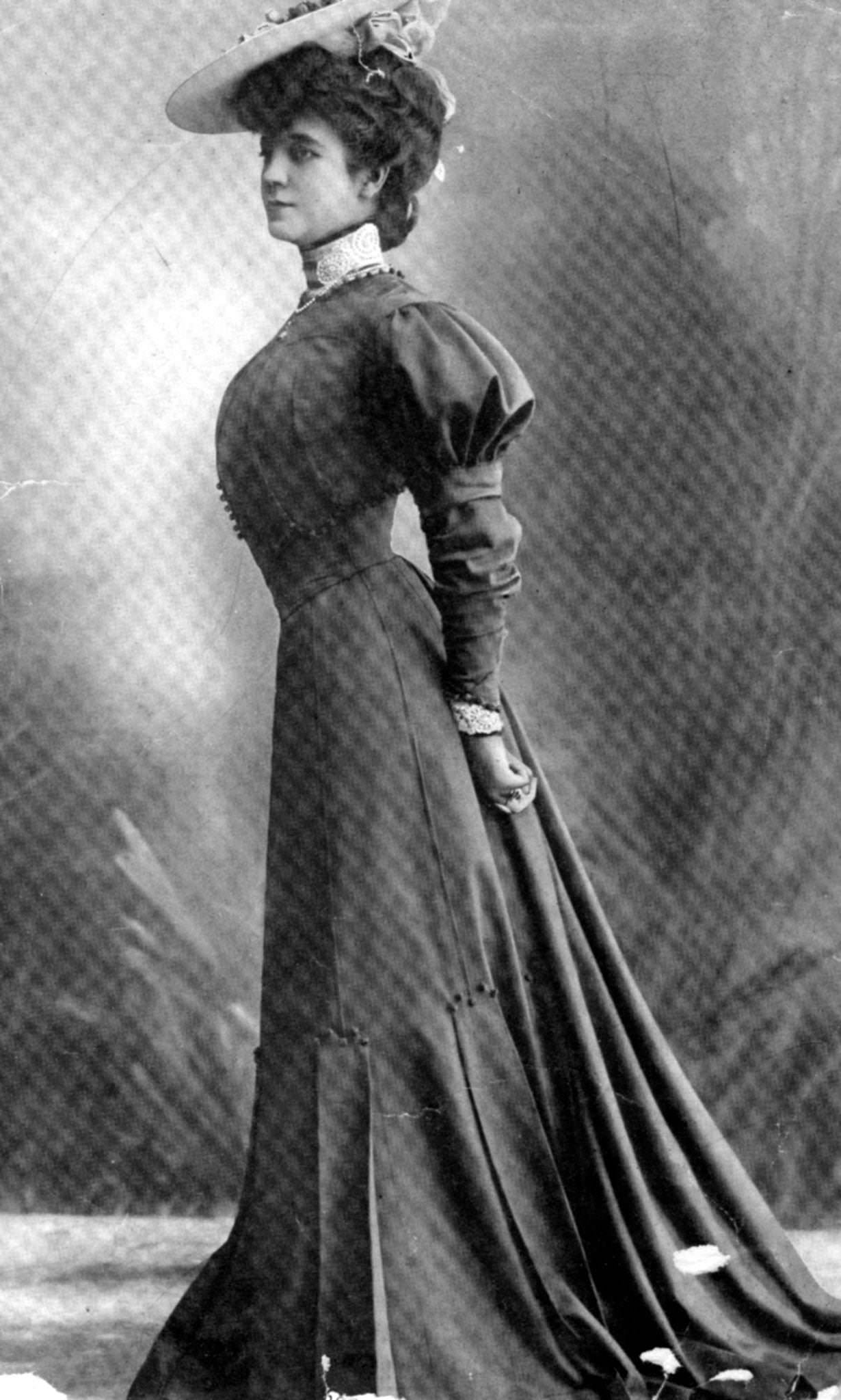
Poised in profile against a softly mottled studio backdrop, an Edwardian woman models the kind of street dress that defined fashionable daytime wear in 1905. The silhouette is unmistakable: a high, lace-trimmed collar rises to the jaw, the bodice fits smoothly through the torso, and the skirt falls in a long, controlled sweep that suggests both movement and restraint. Her expression is calm and composed, the posture carefully arranged to emphasize the era’s ideal line.
Attention inevitably drifts upward to the hat, broad-brimmed and decorated with airy trim that frames her piled hairstyle. In the Edwardian period, women’s hats were not mere accessories but signals of taste, status, and modernity, often designed to balance the pronounced “S-curve” posture favored at the time. Puffy sleeves and fitted cuffs add structure to the ensemble, while subtle surface details—buttons, seams, and trim—hint at the craftsmanship expected in respectable outerwear.
Although photographed indoors, the outfit speaks to the public world outside: walking, calling, shopping, and being seen. The length of the skirt and the tailored bodice underscore how early 20th-century women negotiated elegance with practicality, dressing for urban streets while adhering to social codes of modesty. For anyone searching Edwardian fashion history, 1905 women’s clothing, or the cultural significance of period hats, the image offers a vivid, wearable snapshot of an era in transition.