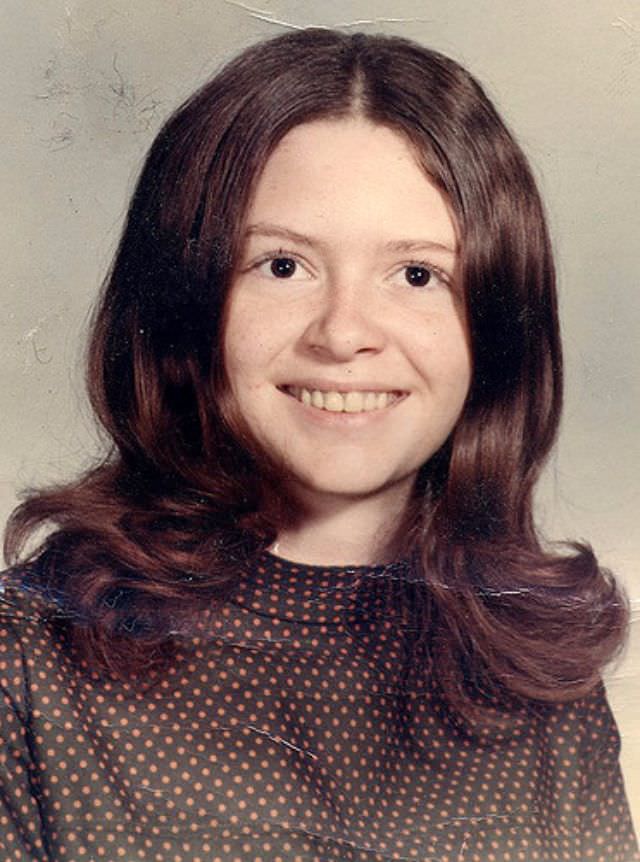
A softly lit studio portrait centers on a young woman with long, glossy hair parted down the middle and styled into smooth, turned-under ends that frame her face. The warm color tones and slightly worn surface give the print an authentic period feel, while her relaxed smile and direct gaze create the intimate immediacy of a classic family or school portrait. A dark top patterned with tiny dots adds texture without competing with the hairstyle, keeping attention on the era’s carefully groomed look.
Although the title points to the towering beehive hairdo, this image sits closer to the everyday end of 1960s hair fashion—proof that the decade’s iconic silhouette had many variations beyond the most dramatic height. The gentle volume at the sides and the polished finish echo the same priorities that made the beehive famous: control, shine, and a sculpted outline built for photographs, dances, and public life. Seen this way, it becomes a companion piece to the beehive trend, showing how mainstream style translated runway drama into wearable hair.
Details like the center part, smooth blowout, and rounded flip speak to a time when hair routine was as much culture as cosmetics, shaped by salon techniques, home rollers, and the promise of long-lasting set. For readers searching the history of 1960s fashion and culture, the portrait offers a grounded reference point—less spectacle, more lived-in style—yet still unmistakably part of the decade’s obsession with statement hair. It’s a reminder that the beehive era wasn’t only about height; it was about craftsmanship and the confidence a well-made hairstyle could lend.