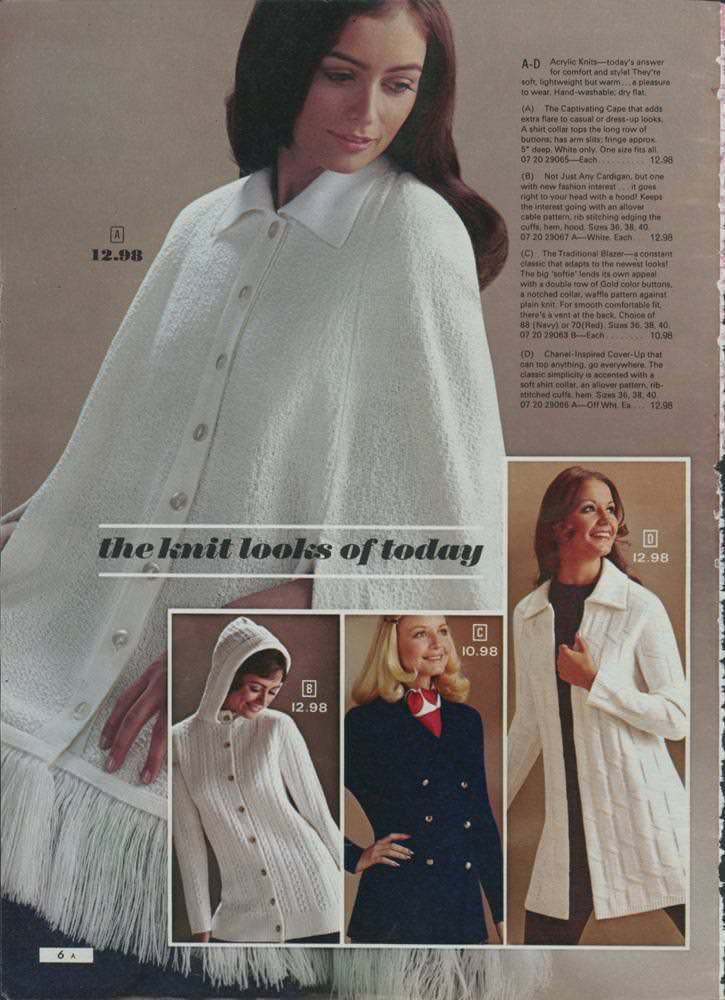
Autumn and winter in 1972 arrive on glossy catalog paper with a simple promise: “the knit looks of today.” A close-up model draped in a textured, button-front knit cape anchors the page, its soft volume and long fringe suggesting both warmth and movement. Alongside the main look, smaller inset photos offer variations—hooded and cardigan styles—turning one spread into a mini wardrobe plan for cold-weather days.
Knitwear here isn’t treated as a humble basic; it’s presented as fashionable outerwear with crisp collars, deep buttons, and clean silhouettes meant for casual afternoons or dressed-up evenings. The sales copy leans into practicality—washable fabrics, comfort, and easy wear—while the studio styling keeps things polished and modern, reflecting the era’s shift toward clothing that could handle busier lives without sacrificing style. Even the pricing and item callouts, printed right on the page, reveal how catalogs guided shoppers through trends in real time.
Set within the wider story of 1970s women’s fashion—when bold colors like purple, mini-skirts, and the growing popularity of slacks competed for attention—this spread highlights the decade’s love of versatility. These pieces bridge the space between mod leftovers and the more relaxed, mix-and-match direction that would define the mid-’70s. For collectors, designers, and anyone searching “1972 women’s fashion catalog” for authentic references, it’s a vivid snapshot of how everyday style was marketed, imagined, and worn.