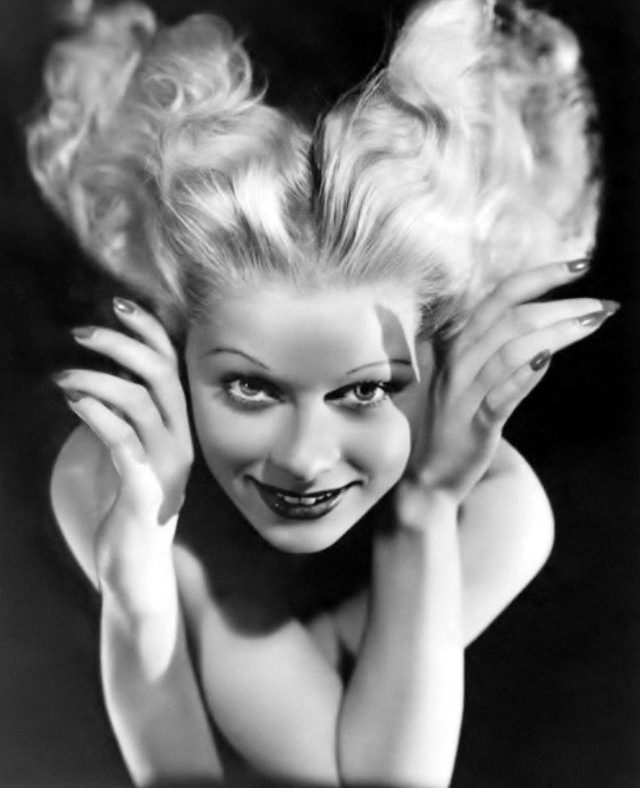
A dramatic studio close-up pulls the viewer straight into the world of 1930s glamour, where sculpted waves of blonde hair frame a playful, knowing smile. The sitter’s hands rise to either side of her face, showing carefully manicured nails and a poised, theatrical gesture that feels equal parts coy and commanding. Lit against a deep, shadowy background, the portrait emphasizes luminous skin, arched brows, and the high-contrast sheen typical of classic Hollywood-era photography.
Linked by title to fashion designer Hattie Carnegie, the image reads like a period advertisement for elegance—less about a full outfit and more about attitude, beauty, and the promise of style. Carnegie’s name evokes the refined, department-store sophistication of the era, and the portrait’s polished presentation suits that market: aspirational, intimate, and meticulously composed. Even without visible wardrobe details, the styling communicates luxury through hair, makeup, and confident pose.
As a piece of fashion and culture history, the photograph reflects how 1935 portraiture sold ideals as much as garments, using soft focus and careful lighting to create an aura of modern femininity. The camera’s closeness turns the subject into an icon, inviting audiences to linger on expression and texture—the curl of hair, the gloss of lipstick, the deliberate line of the eyes. For collectors and researchers, it offers a vivid snapshot of interwar glamour at the intersection of celebrity portraiture and American fashion branding.