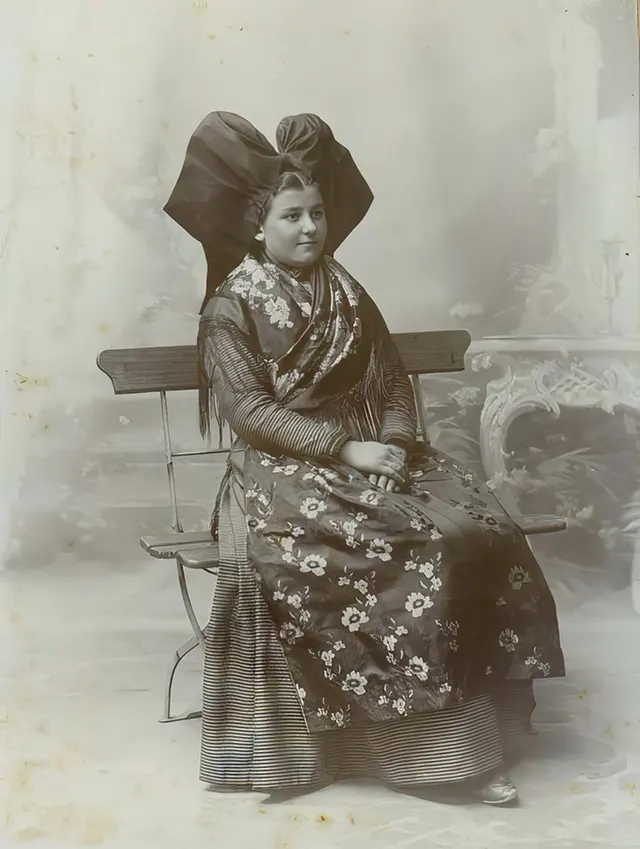
Seated on a simple wooden bench against a softly painted studio backdrop, a young woman wears the unmistakable Schlupfkapp—its broad, bow-like silhouette rising dramatically above her head. The large dark headdress frames her face and draws the eye immediately, balancing the quiet steadiness of her pose. With hands folded in her lap, she appears composed and self-possessed, as if aware that her clothing speaks as loudly as any caption could.
Her outfit layers pattern upon pattern: a floral apron or overskirt drapes over a striped dress, and a fringed shawl is arranged carefully across her shoulders. The textures suggest sturdy, everyday textiles elevated by thoughtful arrangement, the kind of attire that signals community belonging as much as personal taste. Even in the controlled space of a portrait studio, the details feel rooted in lived tradition rather than theatrical costume.
In Alsatian fashion and culture, the Schlupfkapp has long functioned as more than a striking accessory; it is a visual shorthand for regional identity, heritage, and the endurance of local customs. Portraits like this helped fix the headdress in popular memory, turning intimate family imagery into an archive of dress history. For anyone searching for Alsace traditional costume, regional French folk dress, or the cultural meaning of the Schlupfkapp, this photograph offers a clear, evocative glimpse of how identity was worn and presented through the ages.