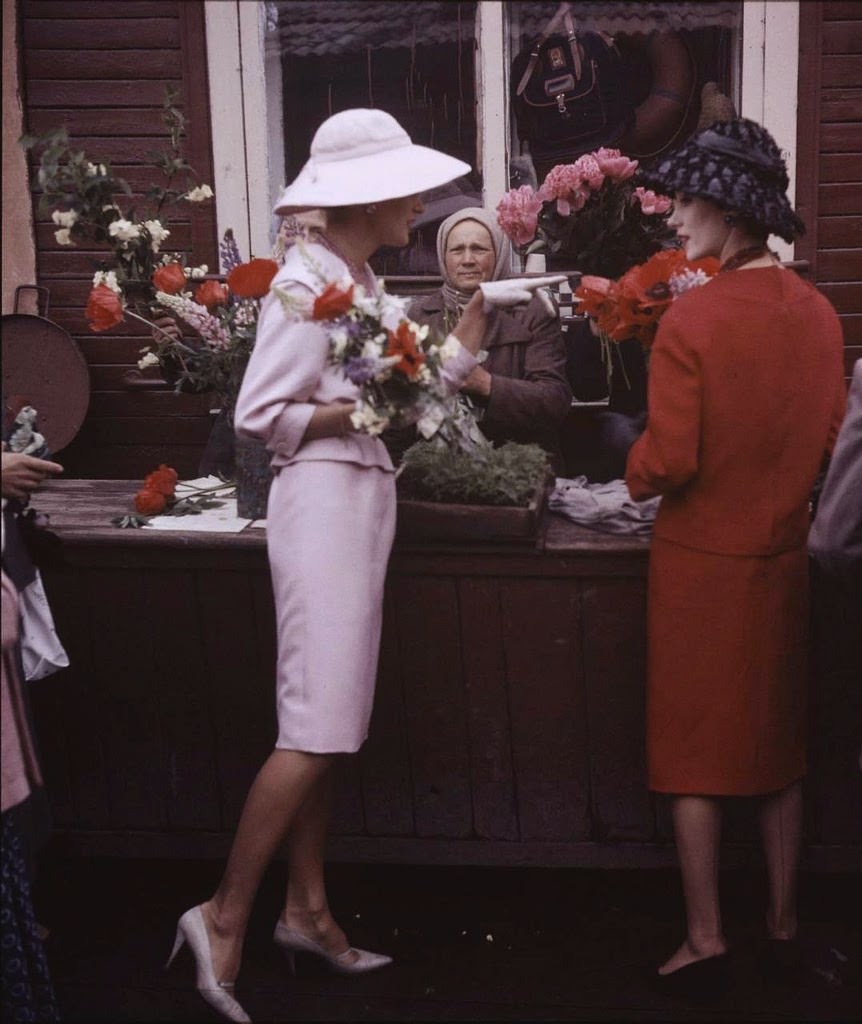
Silk-like pastels and a wide-brimmed hat drift into an everyday street scene, where bouquets spill across a market stall and a small crowd looks on. The contrast is the point: a poised figure in tailored light tones meets a woman in a structured red coat, turning an ordinary transaction into a miniature runway moment. Even without a formal stage, the posture, the gloves, the careful lines of the clothes signal a Western couture sensibility landing in a place not usually associated with Dior glamour.
Moscow in 1959 was a crossroads of ideology and curiosity, and fashion became one of the most visible languages of that encounter. The Soviet street—practical, communal, and watchful—suddenly had to make room for the sharp silhouettes and polished accessories that represented Parisian aspiration. In the faces around the stall, you can read the quiet tension between admiration and skepticism, as if a bouquet of flowers has become a proxy for a larger question: what does modernity look like, and who gets to define it?
For readers drawn to Cold War culture, vintage fashion history, and the surprising pathways of soft power, this image offers a vivid entry point. It suggests how couture traveled not only through magazines and diplomatic events, but through public space—where style could be scrutinized, imitated, or dismissed in real time. “When Dior Took Over the Soviet Streets” isn’t just about clothing; it’s about how a single elegant outfit could disrupt the visual order of a city and leave behind a lingering, complicated fascination.