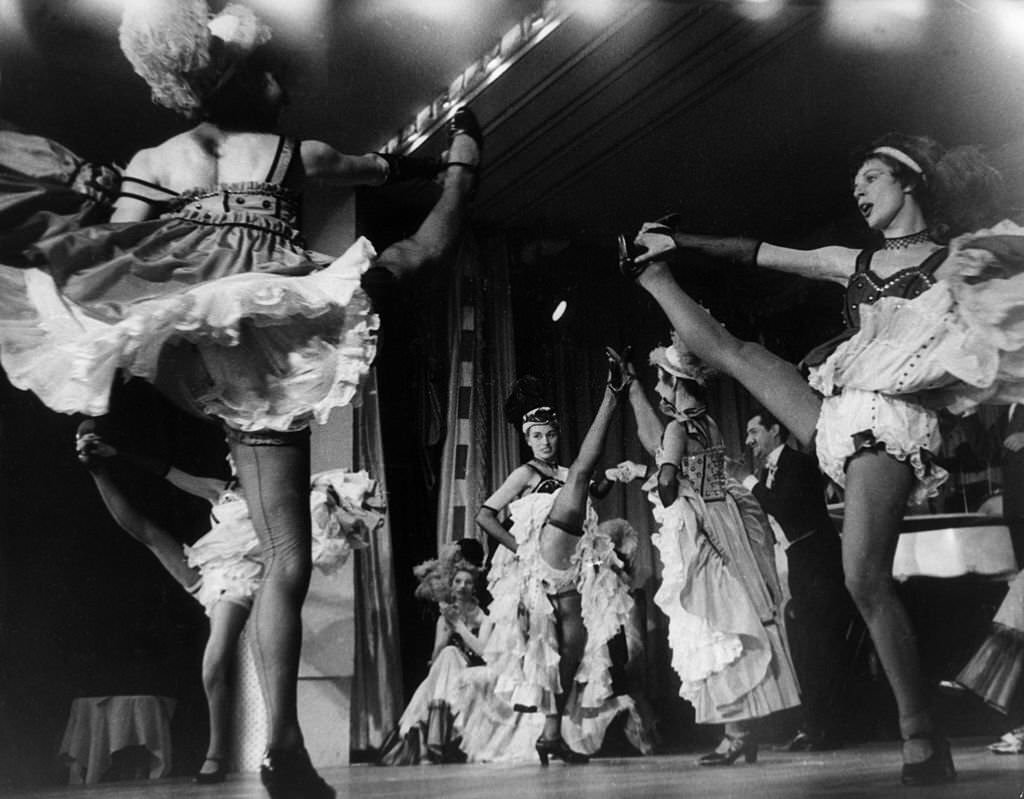
Régine launches into a high kick under the glare of stage lights at the Moulin Rouge, her ruffled skirt fanning outward as if caught in a sudden gust. The camera angle sits low and close to the action, emphasizing long lines of legs in fishnet stockings and the sharp geometry of lifted heels. In the background, other dancers hold poised positions between bursts of movement, their layered costumes creating a froth of fabric against the darkened stage.
Costume details do much of the storytelling: corset-like bodices, bows, and flounces that read clearly even in monochrome, designed to amplify every spin and snap. The can-can’s famous athleticism is written across the performers’ bodies—extended knees, pointed toes, and confident posture—while the choreography suggests both precision and playful provocation. A glimpse of onlookers at the side of the stage adds to the sense of a live spectacle, where performers and audience share the same charged room.
Set in Paris in 1955, the scene evokes postwar nightlife and the enduring allure of cabaret culture, with the Moulin Rouge serving as a global shorthand for glamour and daring entertainment. The photograph balances motion blur and crisp detail to convey speed without losing the textures of lace, tulle, and spotlight haze. For anyone searching vintage Moulin Rouge images, can-can dance history, or mid-century Paris fashion and culture, this performance still feels immediate—an exuberant moment preserved in stage-lit black and white.