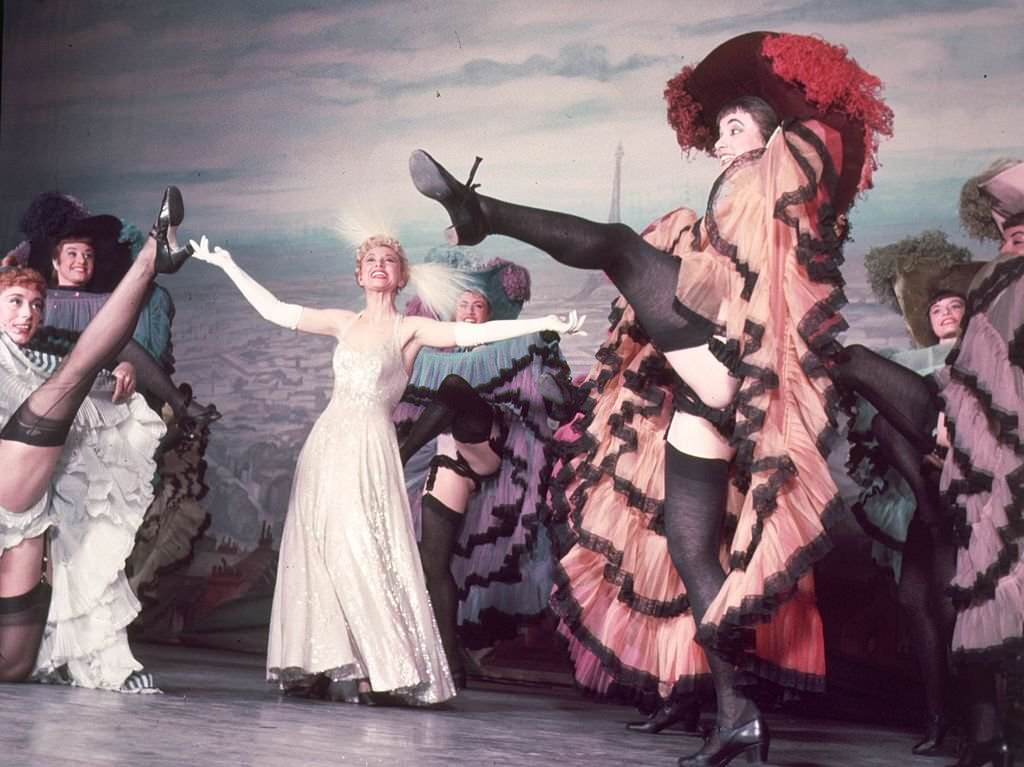
Feathered hats, swirling ruffles, and a burst of high kicks fill the stage as Can-Can dancers throw themselves into a Cole Porter show at the London Coliseum in 1954. The color image freezes a split-second of choreographed bravado: black stockings and shining heels slice upward, petticoats flare, and the performers’ smiles sell the illusion of effortless speed. Behind them, a painted Parisian-style backdrop suggests continental glamour, echoing the dance’s French roots while framing it for a mid-century theatre audience.
At center, a glittering figure in a pale gown opens her arms like a host welcoming the chorus into motion, contrasting the leggy, athletic lines of the dancers around her. The costumes do much of the storytelling—layered skirts trimmed in dark ribbon, bold reds and pastels, and oversized headpieces that exaggerate every turn of the head. Even in stillness, the staging reads as musical theatre spectacle: ensemble symmetry, calculated chaos, and a sense of crescendo captured just before the next beat lands.
Postwar London entertainment prized polish and escapism, and the Can-Can’s high-energy kicks and comic flirtation offered exactly that, packaged for a prestigious venue. This photograph doubles as fashion history, preserving the mid-20th-century showgirl silhouette—corseted waists, dramatic skirts, long gloves, and theatrical hosiery—while hinting at the physical demands behind the sparkle. For searches on Can-Can dance history, Cole Porter productions, and London Coliseum culture, it’s a vivid reminder of how classic choreography and costume design helped define 1950s stage glamour.