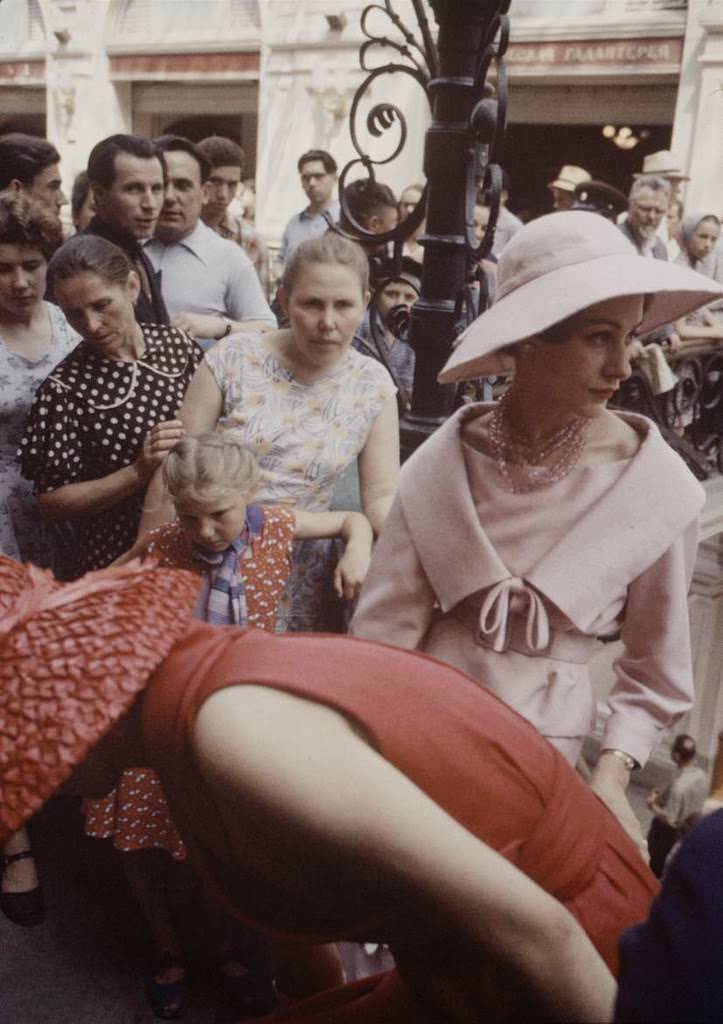
Silk, structure, and a wide-brimmed hat glide into a crowded Moscow street, turning everyday passersby into an impromptu audience. In the foreground, a Dior-style look—pale coat, polished accessories, and the poised profile of a model—contrasts sharply with the practical dresses and workday expressions gathered behind her. The scene feels less like a runway than a sudden cultural interruption, where elegance arrives not as rumor but in full view.
Faces in the crowd do much of the storytelling: curiosity, skepticism, and quiet appraisal register as people lean in, some craning for a better look while a child clutches close to an adult. A wrought-iron street fixture anchors the center, as if marking the boundary between two visual languages—Soviet street life and Parisian couture. Even without a formal stage, the moment reads as fashion theater, with the city itself supplying the backdrop and the verdict.
Set against the title’s “1959 fashion shock,” this historical photo captures a brief opening when Western luxury branding and Soviet modernity collided in public space. The image is a rich entry point for readers interested in Dior in Moscow, Cold War cultural exchange, and how clothing became a form of soft power as well as personal aspiration. It’s a reminder that style history isn’t confined to salons and magazines; sometimes it happens curbside, under watchful eyes, in the middle of an ordinary day.