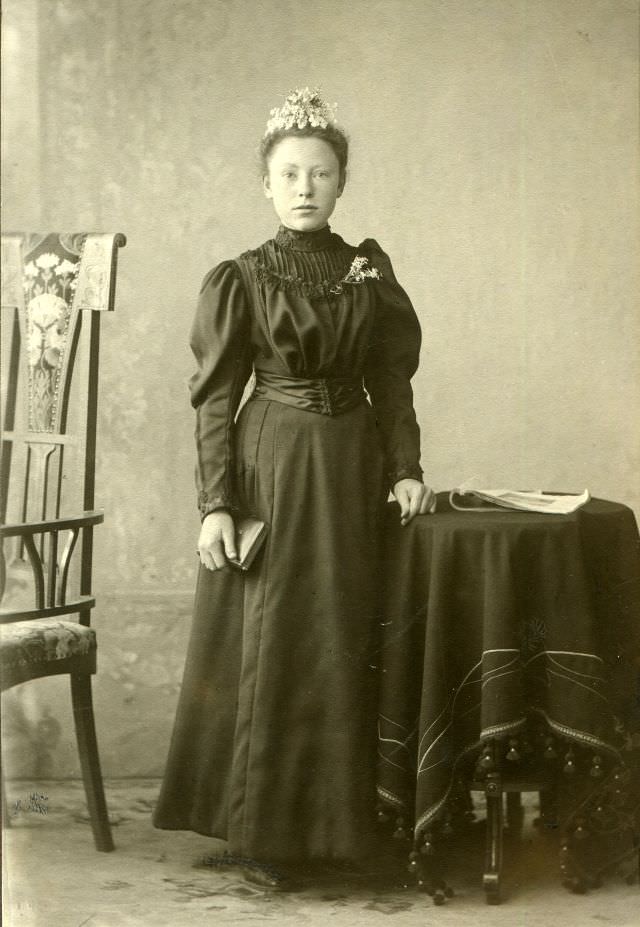
Poised in a studio setting, a young Victorian woman faces the camera with a steady, unembellished gaze, her dark dress falling in a long, controlled line to the floor. The high collar and gathered bodice emphasize modesty, while the fitted waist hints at the rigid structure beneath—corsetry shaping the silhouette that late 19th-century fashion prized. A small floral adornment at the chest and a light, decorative headpiece soften the severity of the outfit, balancing restraint with a touch of ornament.
Details in the scene reinforce the era’s visual language of respectability: a carved chair with patterned upholstery, a draped table, and a book or paper placed as if to suggest education or refinement. She holds a small object—likely a compact accessory such as a case or purse—adding a domestic, personal note to the formal portrait. The careful posture, with one hand resting near the table, reads as both practical and performative, a stance designed to display clothing, figure, and composure.
Corsets were more than an “indispensable undergarment” in Victorian culture; they were a technology of fashion that influenced how women moved, sat, and were seen. Photographs like this double as style documents, capturing the interplay between outer dress and hidden structure—boning, lacing, and the disciplined waistline that defined the period’s ideal. For anyone exploring Victorian women’s fashion history, late 19th-century portrait photography, or the cultural meaning of tight corsets, the image offers a quiet but vivid record of elegance shaped by constraint.