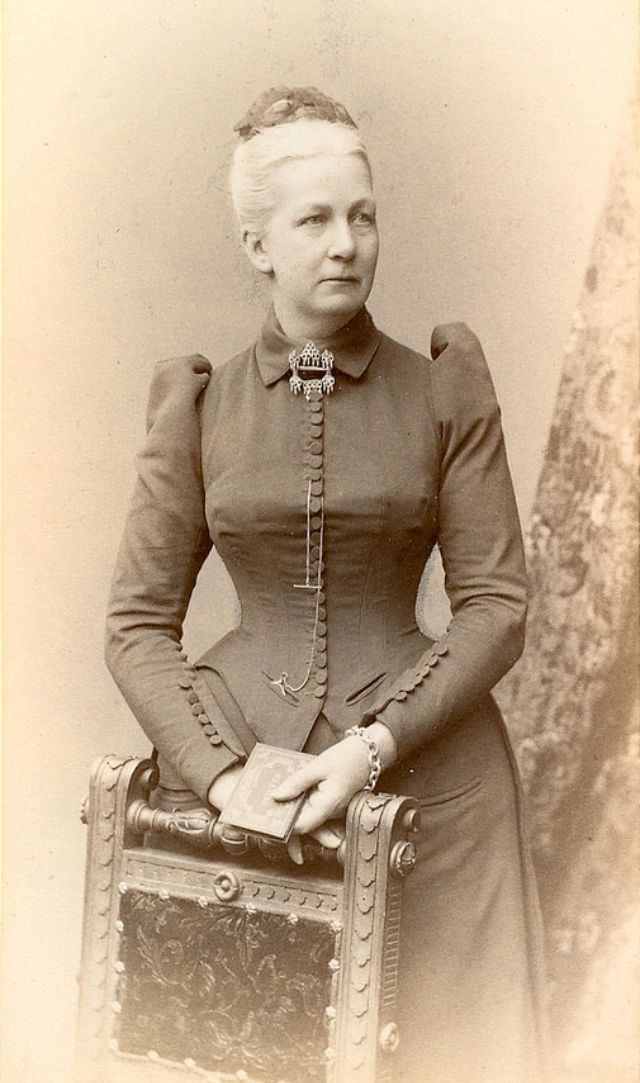
Poised in a studio setting, a Victorian woman stands with her hands resting on the back of an ornate chair, a small book held lightly as if it were part of her introduction. Her gaze turns slightly away from the camera, giving the portrait a candid dignity despite the formality of late 19th-century photography. The smooth, pale backdrop and soft sepia tones keep attention on her silhouette and the careful arrangement of dress, hair, and accessories.
The tight, structured bodice reveals how the corset shaped fashionable posture and the era’s idealized waistline, pulling fabric into crisp vertical lines and an unmistakable hourglass form. Puffing at the shoulders and the high collar frame the neck, while a decorative brooch and long chain add texture and status to an otherwise restrained ensemble. Even without seeing the undergarment itself, the corset’s influence is written into every seam, button, and curve of the garment.
Victorian corsetry was more than a beauty tool; it was an indispensable foundation of women’s clothing, guiding how dresses hung, how bodies moved, and how respectability was visually signaled. Portraits like this one serve as quiet documents of fashion and culture, reminding modern viewers that “tight corsets” belonged to a broader system of etiquette, class aspiration, and craftsmanship. In the stillness of the pose, the late 19th-century ideal of controlled elegance is preserved—both admired and debated ever since.