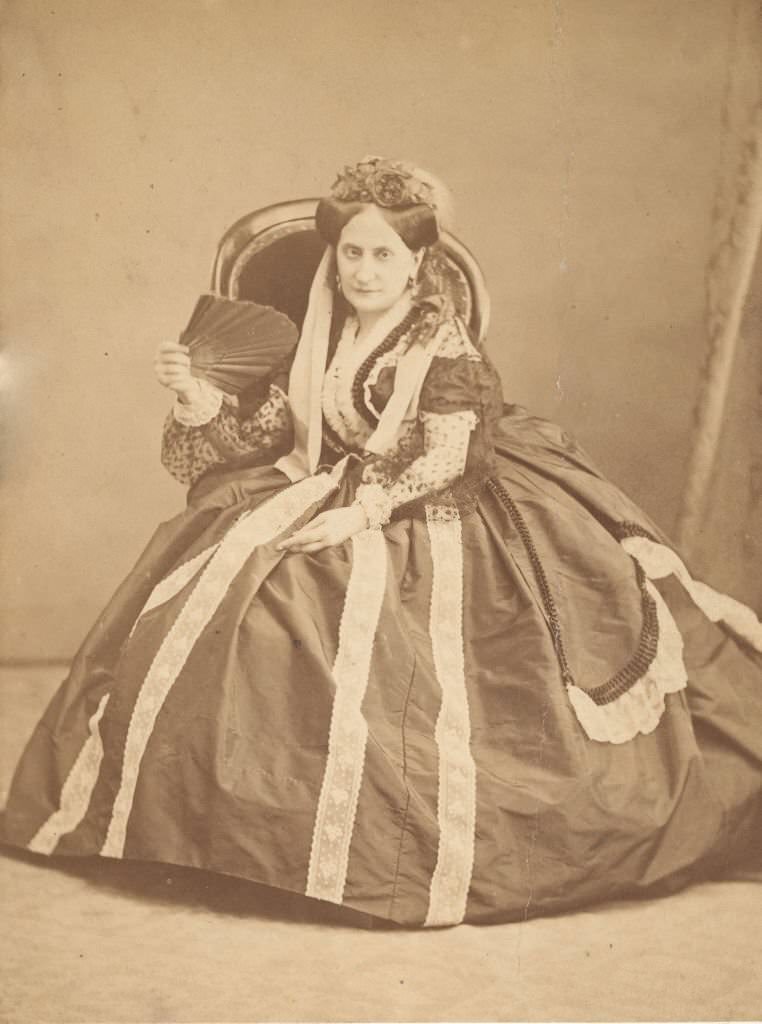
Seated in a formal studio setting, the comtesse meets the camera with a composed, almost conversational gaze, her posture carefully arranged in an upholstered chair. A fan is lifted in one hand—an accessory that reads as both fashionable prop and symbol of polite society—while a second, lighter-toned item rests across her lap. The plain backdrop and soft sepia tones keep attention fixed on her face, her jewelry, and the deliberate elegance of the pose.
Crinoline fashion of the 1860s is unmistakable here, as the skirt spreads outward in a wide dome that fills the frame. Broad bands of pale trimming run vertically over darker fabric, emphasizing volume and structure, while patterned sleeves and a fitted bodice highlight the era’s contrast between narrow waist and expansive silhouette. Her coiffure, adorned with floral decoration and long ribbon-like streamers, reinforces the period’s taste for ornate detail from head to hem.
Beyond clothing, the portrait offers a glimpse into 19th-century status and etiquette, when photographic sittings could serve as public statements of refinement. The controlled lighting, the careful placement of hands, and the prominent fan all speak to the language of fashion and culture that surrounded aristocratic identity. For historians of Victorian dress, studio photography, and women’s material culture, “La Comtesse Seated with Fan” reads as a rich record of how style, posture, and objects worked together to signal rank in the 1860s.