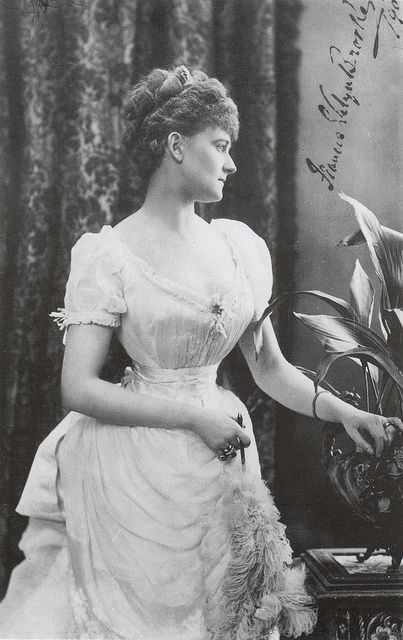
In profile against a dark, patterned studio backdrop, a young Victorian-era woman stands poised beside a leafy houseplant, her gaze turned thoughtfully off-frame. The soft lighting picks out the curve of her high, carefully arranged updo and the smooth line of her neck, while the photographer’s formal setting—drapery, pedestal table, and potted foliage—signals the period’s taste for staged elegance. A faint handwritten inscription near the top edge hints at the photograph’s life as a treasured keepsake, passed between admirers or family.
Her late-1800s fashion speaks in layers: a pale dress with puffed short sleeves, a tightly fitted bodice, and a cinched waist that emphasizes the era’s ideal silhouette. Delicate trim and subtle ruching add texture without overwhelming the overall simplicity, suggesting an outfit intended for a special sitting rather than everyday wear. She holds a feathery fan at her side, an accessory that carried both practicality and social meaning, offering another touch of refinement to the portrait.
Beyond clothing, the scene reflects Victorian culture’s fascination with propriety, domestic beauty, and curated identity. Studio portraits like this were a form of self-presentation—an opportunity to record status, taste, and modern femininity at a time when photography was becoming increasingly accessible. For readers drawn to late 1800s fashion history, the combination of hairstyle, dress construction, and genteel props creates a vivid window into the visual language Victorian ladies used to be remembered.