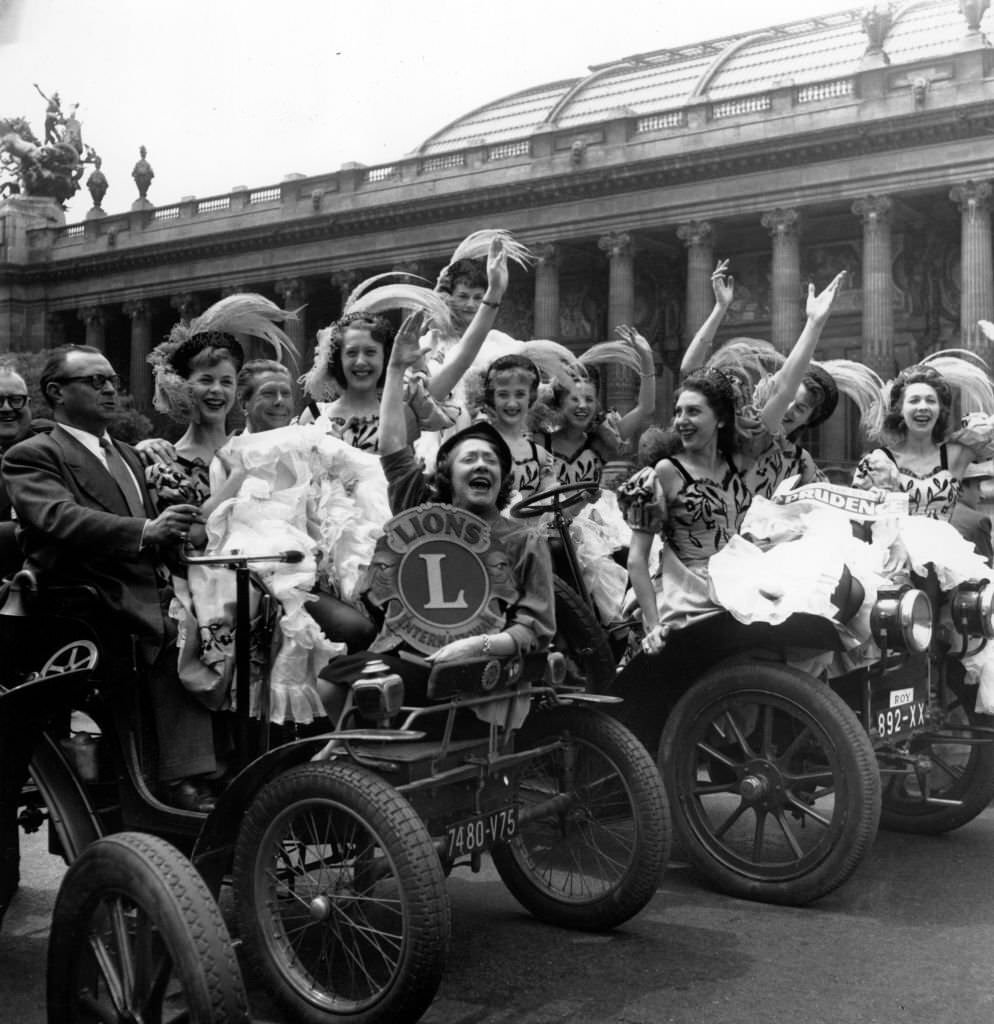
Feathered headpieces and wide, ruffled skirts erupt into motion as Moulin Rouge cancan dancers ride through Paris in an open-topped motorcar, waving to the crowd with theatrical glee. The frame is packed with smiles, lifted arms, and swirling fabric, turning the street into a stage where cabaret glamour meets public spectacle. A “Lions” emblem and banners for “prudence” hint at a civic campaign backdrop, while the performers’ costumes keep the mood defiantly festive.
Behind them rises the long colonnade and glass-roofed profile of the Grand Palais, an unmistakable Paris landmark that lends the scene its monumental scale. The contrast is striking: formal Beaux-Arts architecture and suited men in the foreground set against the dancers’ exuberant energy, as if the city’s sober grandeur is being momentarily interrupted by music-hall sparkle. Even the vintage cars—spoked wheels, exposed chassis, and period license plates—anchor the image firmly in mid-20th-century street life.
Staged to launch the “crusade of prudence 54,” the event reads like a clever blend of publicity, philanthropy, and entertainment culture, using famous cancan imagery to draw attention to a message about caution and public responsibility. It’s a vivid snapshot of 1950s French fashion and culture, when the Moulin Rouge brand could step outside its own doors and animate a civic procession. For anyone searching Paris history, Moulin Rouge dancers, or cancan photo archives, the picture preserves a moment when joy, marketing, and urban identity collided in plain view.