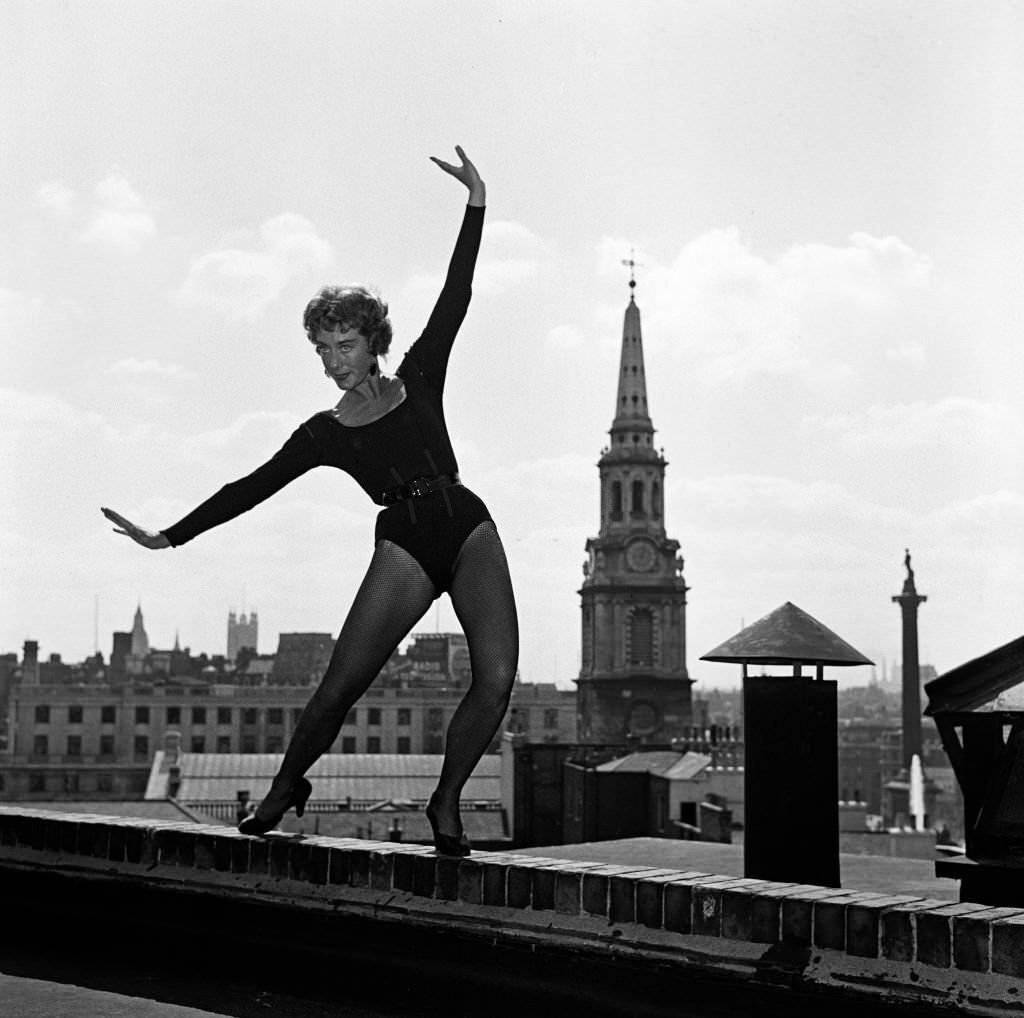
Poised high above the streetline, dancer Gillian Lynne strikes a buoyant, off-balance line—one arm lifted, the other stretched outward—turning a plain rooftop parapet into a stage. Dressed in a dark, fitted rehearsal-style outfit with fishnet tights and heels, she leans into the camera’s dramatic angle, her expression playful but controlled, as if holding the beat between music cues.
Behind her, a London skyline of chimneys, rooflines, and a prominent church spire situates the moment in the working city rather than the plush theatre interior. The open sky and distant landmarks create a bold contrast with the crisp silhouette of her body, emphasizing the athletic geometry of mid-century dance photography and the public fascination with performers “caught” in motion.
Publicity images like this carried the promise of Can-Can’s high-energy spectacle—kicks, speed, stamina—while also selling an attitude: modern, confident, and a little daring. Linked to the opening at the Stoll Theatre in 1954, the photograph bridges stage glamour and everyday urban texture, offering a vivid window into postwar British theatre culture and the evolving fashion of performance in the 20th century.