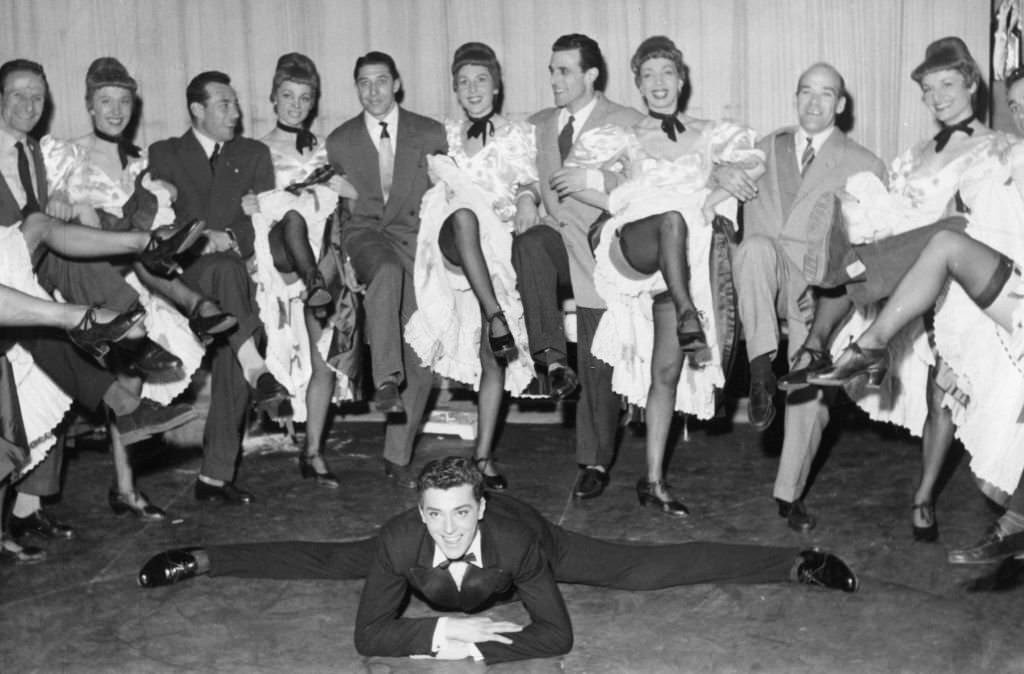
A jubilant line of French cancan winners poses in mid-kick, their ruffled skirts lifted high to reveal dark stockings and polished heels, while suited partners sit and stand among them like proud escorts at a gala. The backdrop is plain and stage-like, keeping attention on the performers’ confident smiles, coiffed hair, and the crisp contrast between formal menswear and flamboyant dance costume. The composition reads as both celebration and proof: these are champions of endurance as much as style.
Front and center, a male dancer drops into a dramatic floor split, grinning directly at the camera with the ease of someone who has survived the marathon and still has showmanship to spare. Around him, the chorus line creates a rhythmic frame—knees raised, toes pointed, legs aligned—suggesting the disciplined precision behind the cancan’s famous chaos. Even in a still image, the scene conveys motion, music, and the playful competition of a long-format dance contest.
Tied to the title, “The winners of the Six days dancing the French cancan,” the photograph hints at an era when dance could be staged as a spectacle of stamina, turning nightlife culture into headline-worthy sport. Details like the matching bows at the neckline, the layered petticoats, and the men’s tailored suits anchor the image in 20th-century fashion and entertainment history without needing a named venue. For readers searching cancan dance history, vintage performance photos, or the culture of endurance competitions, this winner’s portrait delivers the exuberant glamour—and the athletic grit—behind the high kicks.