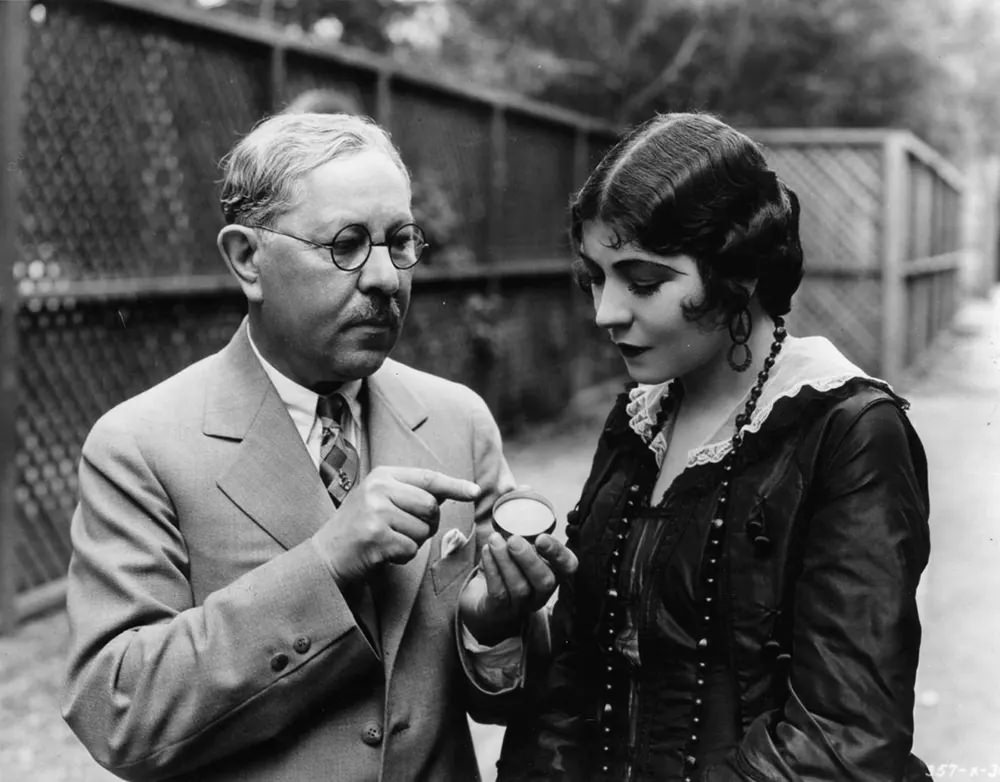
A bespectacled cosmetics expert in a tidy suit leans in, finger raised in instruction, while actress Renee Adoree studies a small compact resting in her palm. Her bobbed hair, dark lipstick, and drop earrings signal the fashionable look of the mid-1920s, when screen style and everyday beauty routines were rapidly converging. The tight focus on their hands and faces turns a simple product into a moment of professional coaching—part lesson, part sales pitch.
Behind the poised exchange sits an outdoor backdrop of fencing and a quiet walkway, an unglamorous setting that makes the scene feel even more candid. Adoree’s gaze is lowered, attentive and curious, as if weighing how this “new kind of rouge” might read under harsh lights and unforgiving film stock. The advisor’s precise gesture suggests the era’s growing belief that makeup could be engineered—measured, calibrated, and perfected—rather than merely applied.
Images like this are a vivid window into 1920s Hollywood makeup culture, when cosmetics were becoming tools of both performance and personal identity. Rouge, in particular, was central to sculpting the modern face on camera, balancing shadow and highlight long before color film became standard. For historians of fashion and film, the photograph captures a turning point: beauty marketed as expertise, and the actress positioned as both client and trendsetter for audiences eager to emulate the latest screen-ready look.