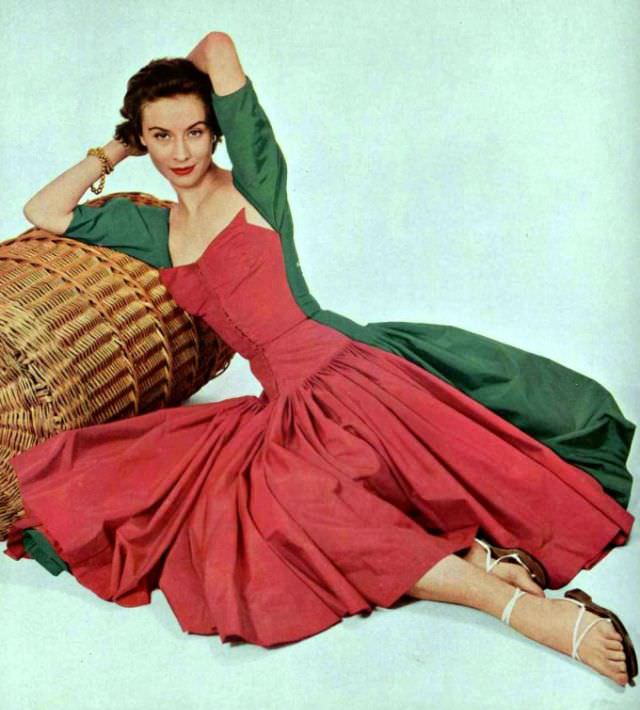
Reclining beside an oversized woven basket, Gigi Terwalgne poses with the relaxed confidence of early-1950s fashion imagery, one arm lifted behind her head and her gaze held steady. The clean, pale backdrop keeps attention on her silhouette and on the sculptural sweep of fabric spilling across the floor. Strappy heels and a neat bracelet add a crisp note of polish to a scene that still feels summery and informal.
Two opposing colors define the Grès design: a rich rose-toned dress contrasted by deep green panels that read almost like a cape as they trail behind her. The bodice is closely fitted, while the skirt opens into generous, rhythmic folds that suggest movement even in stillness. That interplay—control at the top, volume below—highlights the couture skill associated with Madame Grès, where cut and drape do as much work as ornament.
As a slice of 1952 style, the photograph speaks to postwar haute couture’s fascination with bold color blocking, feminine lines, and theatrical yet wearable elegance. The styling is spare, letting texture, tailoring, and proportion carry the narrative, a hallmark of fashion editorials meant to celebrate craftsmanship. For historians of fashion and culture, it offers a vivid reference point for mid-century couture photography, showcasing how a single dress could communicate modernity, leisure, and luxury all at once.