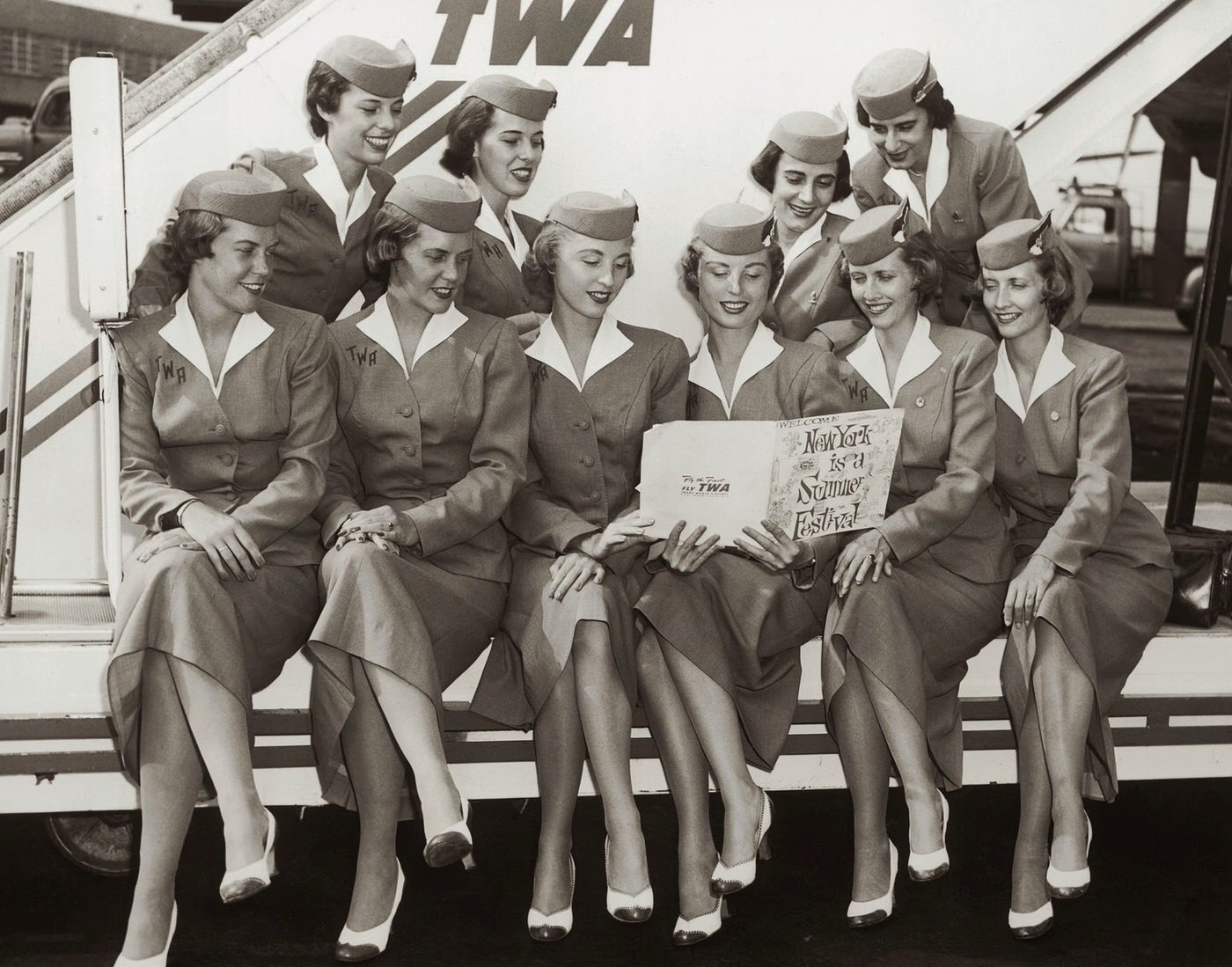
Perched on the aircraft steps beneath the bold TWA lettering, ten stewardesses are arranged in two neat rows—an instantly readable bit of airline publicity from 1956 built around the novelty of five twin pairs. The title identifies them precisely: front row, left to right, Jean and June Manby, Marilyn and Marlene Nagel, Phyllis and Mary Lous Jibbes; back row, Ruth and Pat Zimmerman and Rose and Victoria Lewis. Their mirrored smiles and coordinated poses invite the viewer to compare faces, gestures, and the small personal differences that slip through even the most carefully staged promotional photo.
Uniform design does much of the storytelling here: tailored jackets with crisp light lapels, matching caps, and polished heels create a streamlined, modern silhouette that fit mid-century ideas of glamour in air travel. The TWA insignia appears on the chest, turning each figure into a walking brand, while the tidy hair styling and consistent accessories underline the era’s emphasis on polish and professionalism. A brochure or booklet is held open at center, a reminder that airlines sold destinations as much as transportation—service, style, and the promise of an exciting city break all folded into one image.
Publicity like this helped define the “Golden Age” of commercial aviation, when stewardess fashion and corporate image were tightly intertwined with customer expectations. Twins made a perfect marketing hook: memorable, photogenic, and easy to translate into newspaper and magazine spreads, reinforcing the sense that TWA offered something special and modern. For readers interested in flight attendant history, mid-century uniforms, and airline culture, this photograph is a compact snapshot of how branding, femininity, and travel aspiration met on the tarmac.