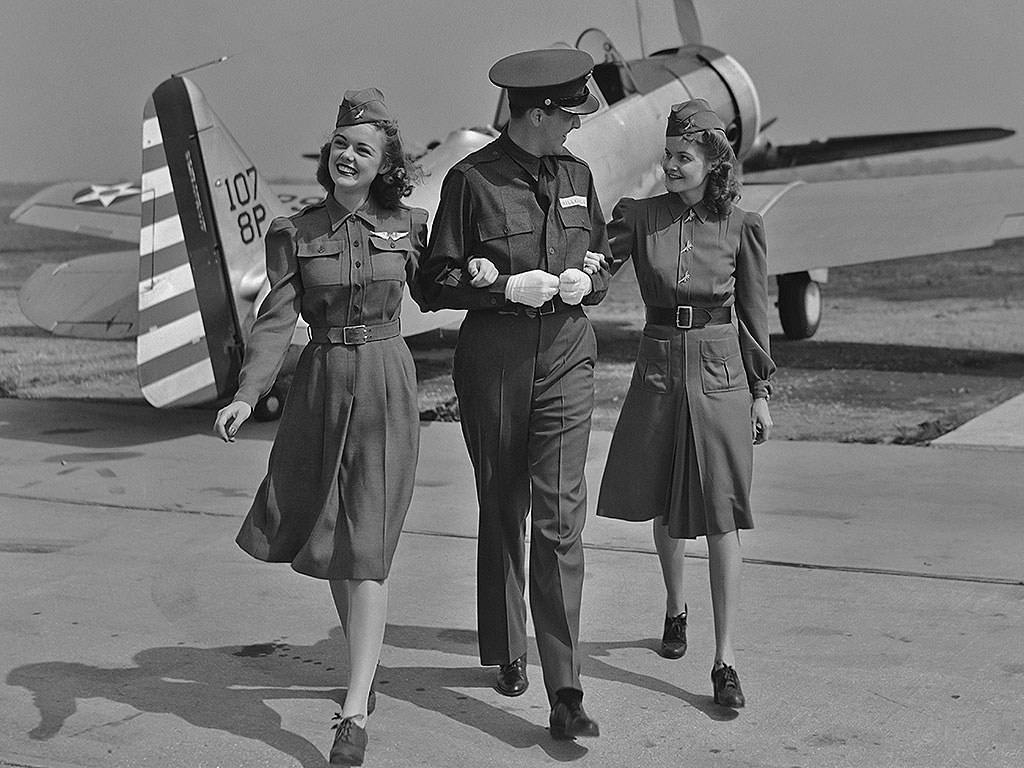
Arms linked and steps in sync, three flight attendants stride across the tarmac with the easy confidence of the 1940s aviation world. A small plane waits behind them, its tail markings and smooth fuselage framing the scene like a stage set, while their uniforms—caps, structured jackets, and belted skirts—signal the era’s blend of discipline and glamour. Smiles and side glances add a candid warmth that turns a simple walk into a snapshot of airline culture in motion.
What stands out is the balance between professionalism and presentation: crisp tailoring, polished shoes, and practical hemlines suited to wind and runway. The presence of a male flight attendant alongside two female colleagues hints at a broader story of changing roles in air travel, when service, safety, and public image were carefully curated for passengers newly captivated by flying. Even without a named airline or specific airport, the visual language is unmistakably mid-century—orderly, optimistic, and proudly modern.
For readers drawn to flight attendant fashion and the social history of air travel, this photograph bridges the “Golden Age” romance with the working realities behind it. The uniforms double as branding, the tarmac becomes a runway, and the aircraft in the background roots the moment in everyday operations rather than studio fantasy. Taken together, it’s a compelling piece of vintage aviation history—one that highlights how style and culture helped sell the dream of flight.