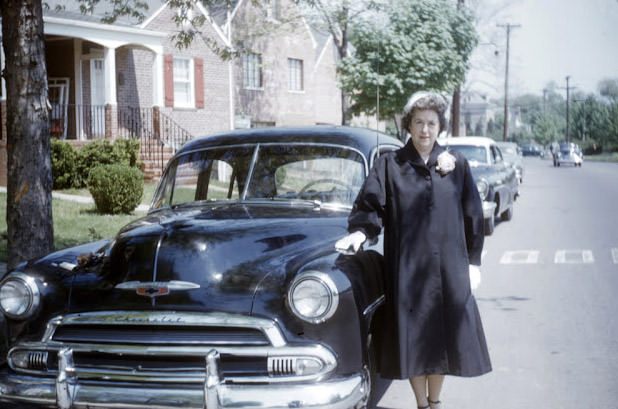
A well-dressed woman stands at the curb beside a polished Chevrolet, her gloved hand resting on the car’s broad hood as if to underline its pride of place in mid-century life. She wears a dark, knee-length coat with a neat collar and a floral corsage pinned high on the chest, a small flourish that reads as formal even in daylight. Her softly styled hair and composed posture echo the era’s emphasis on poise—an everyday kind of glamour that didn’t require a ballroom to feel sophisticated.
Behind her, a quiet residential street stretches past brick houses, trimmed lawns, and a line of parked cars, situating fashion within the rhythms of suburbia and postwar mobility. The scene feels candid yet carefully presented: the sheen of chrome, the rounded fenders, and the orderly neighborhood all reinforce a 1950s ideal of comfort, progress, and respectability. Even without a captioned date or place, the visual language—architecture, automobiles, and clothing—anchors the moment firmly in the decade’s aesthetic.
Style in the 1950s wasn’t only about dresses and runways; it was also about outerwear, accessories, and the social signals they carried in public space. The gloves, the corsage, and the structured silhouette suggest occasions like church, a family visit, or a community event, where looking “put together” was part of the culture. As a piece of fashion history, the photograph offers a vivid window into mid-century women’s sophistication—where confidence, courtesy, and careful detail defined what glamour looked like on an ordinary street.