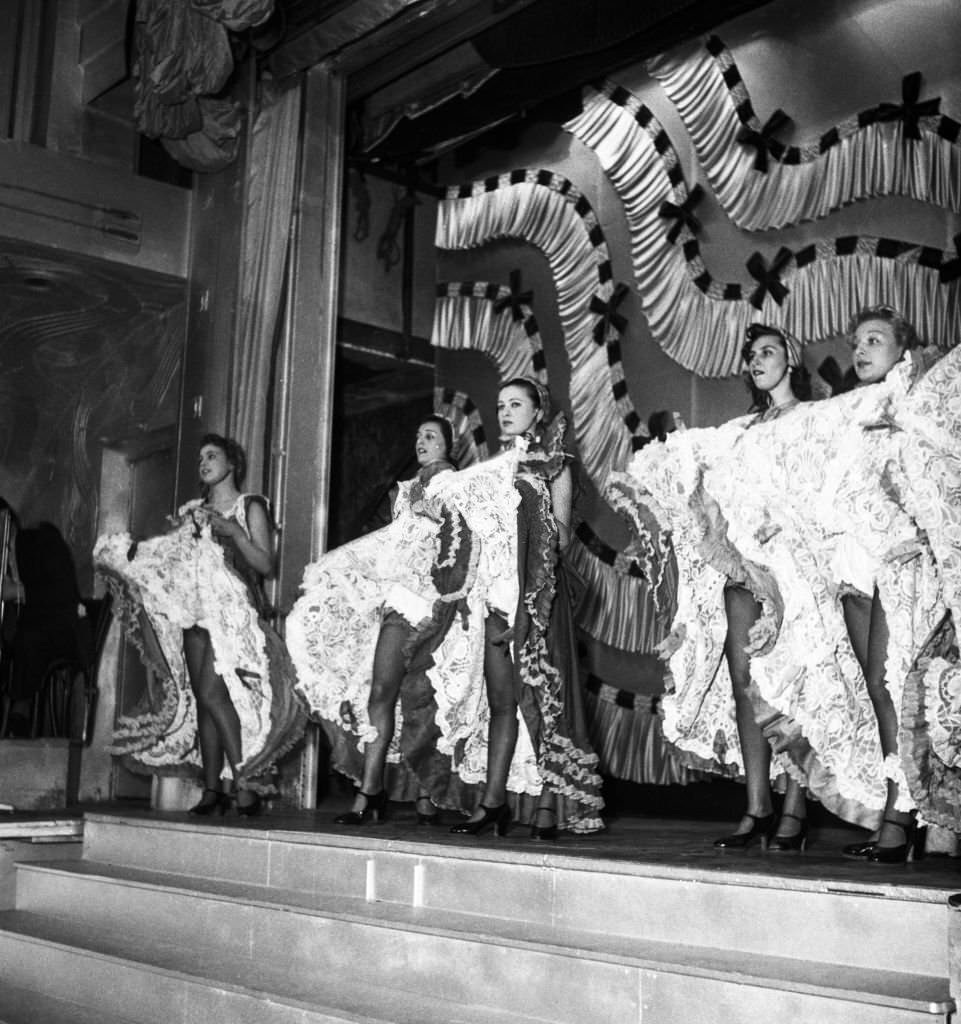
Spotlit on a small stage, the Bal Tabarin’s French cancan dancers lift their layered skirts in unison, the ruffles billowing like white waves across the line. Each performer holds the hem high to reveal stockings and heeled shoes, a classic cancan silhouette that balances flirtation with athletic control. The women’s focused expressions and squared shoulders suggest a rehearsed routine caught mid-beat rather than a posed publicity still.
Behind them, the set design amplifies the spectacle: looping, ribbon-like drapery patterned with bold dark accents and bow shapes, framing the dancers as if inside a festive proscenium. The stepped platform and tight spacing hint at a nightclub or cabaret setting where audiences sit close enough to feel the stomp and swish of fabric. Even in monochrome, the textures—lace, pleats, and satin-like trim—read vividly, emphasizing the fashion and craftsmanship of mid-century stage costume.
London in 1953 provides the cultural backdrop for this imported Parisian fantasy, when postwar nightlife and entertainment leaned into glamour, travel, and theatrical escapism. The cancan’s reputation as a high-energy, physically demanding dance comes through in the synchronized lift and poised legs, capturing both discipline and showmanship. As a piece of 1950s performance history, the photograph connects French cabaret tradition with the city’s own evolving scene of music halls and nightclubs, making it a rich visual document of fashion, dance, and popular culture.