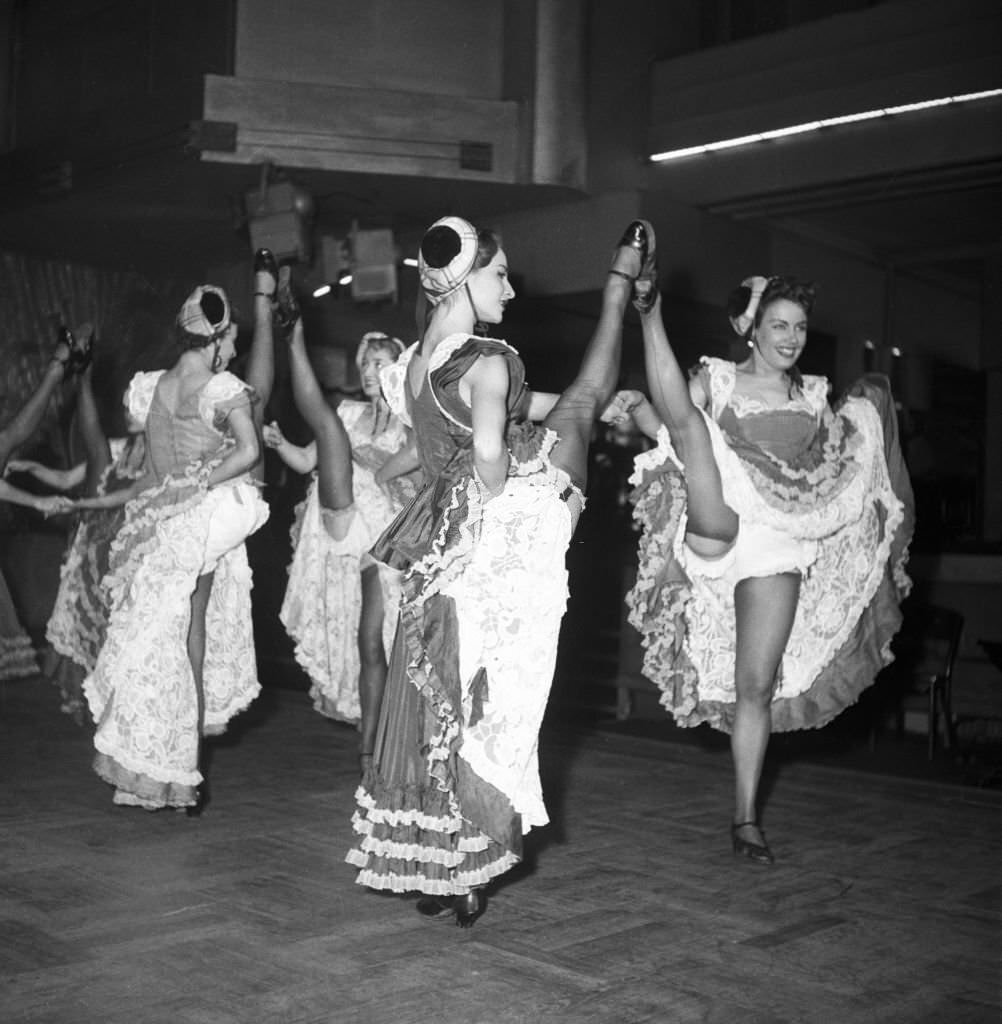
Mid-kick and perfectly poised, a line of French cancan dancers fills the floor at the Bal Tabarin in London in 1953, their raised legs forming a rhythmic fan across the frame. Ruffled skirts and lace petticoats billow outward with each snap of movement, while heeled shoes and dark stockings sharpen the silhouette of a dance built on precision. One performer turns in profile as others face the room, suggesting a choreographed sequence caught at its most athletic moment.
The costumes do much of the storytelling: tiered hems, puffed sleeves, and matching headpieces evoke the cabaret tradition that made the cancan a symbol of Parisian nightlife, now exported for British audiences hungry for postwar glamour. Bright stage lighting glints off fabric and skin, giving the scene a backstage-or-club ambience rather than a formal theater setting. Smiles and concentrated expressions sit side by side, hinting at the stamina required to sustain such high-energy routines night after night.
As a piece of mid-century fashion and culture, the photograph balances spectacle with work, capturing entertainers in the midst of a physically demanding performance rather than a posed publicity moment. The Bal Tabarin name—already associated with continental cabaret—adds an extra layer of cosmopolitan allure to London’s nightlife history. For anyone searching the history of the cancan, 1950s dance photography, or vintage cabaret style, this image offers a vivid glimpse of how choreography, costume, and popular taste converged on a crowded floor.