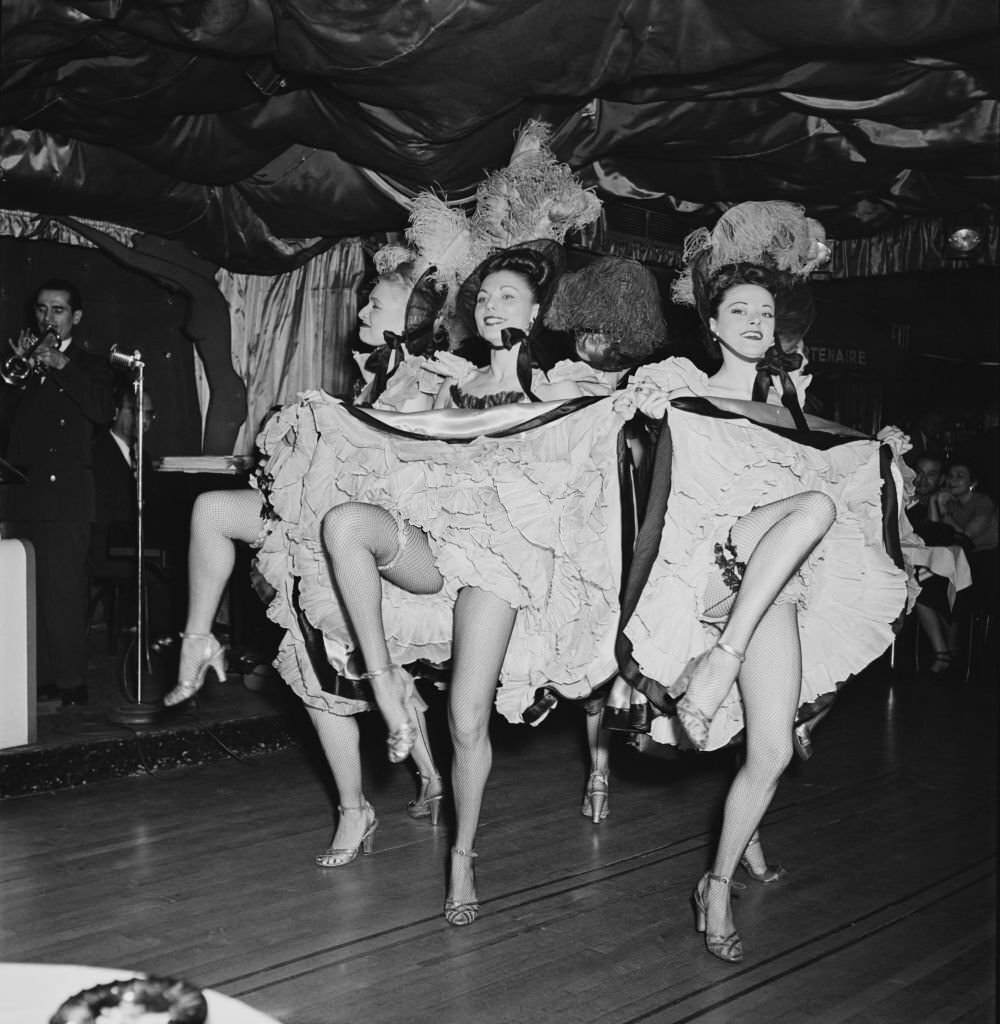
Feathered headpieces bob beneath a low, draped ceiling as a chorus line hits a synchronized high kick at the Bal Tabarin nightclub in New York City. The dancers’ faces are turned toward the room with practiced brightness, while layered ruffles flare like sails in motion, briefly revealing fishnet stockings and strappy heels. At the edge of the stage, a musician leans into his instrument, reminding the viewer that this glittering spectacle was powered by live sound as much as by choreography.
Cabaret style here is all about controlled excess: towering plumes, dramatic makeup, and skirts built for maximum swirl and snap. The CanCan-inspired move—lifting the hem as the leg rises—reads as both athletic and theatrical, a physically demanding routine designed to thrill an audience at close range. Even in a single frame, the timing is palpable, with multiple performers caught mid-step, their costumes creating a rhythmic pattern of light and shadow.
Nightclub entertainment in the late 1940s offered a particular kind of postwar escapism, and the Bal Tabarin’s floor-level stage places the action right in the social current of the room. Tables and seated patrons hover in the background, suggesting a nightlife culture where dining, music, and dance blended into one continuous performance. For fashion and culture history, the photograph preserves the era’s showgirl aesthetic—part glamour, part labor—capturing how New York cabaret sold fantasy through precision, stamina, and spectacle.