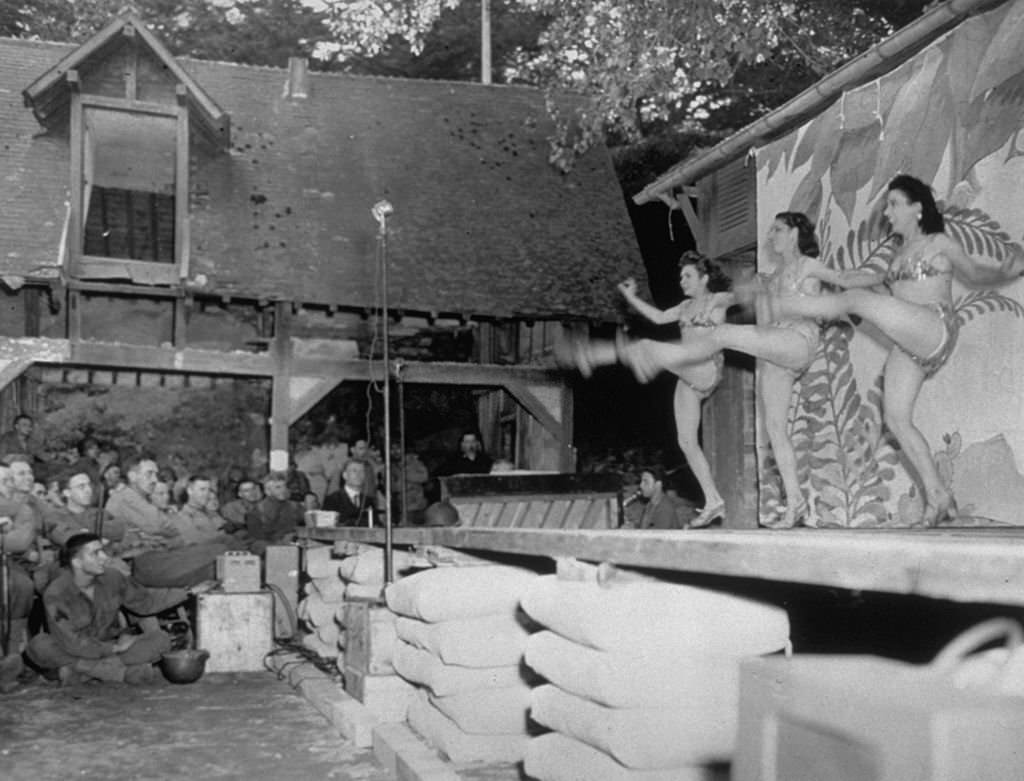
Under a canopy of trees and improvised stage lights, three young French dancers lift their legs in a crisp can-can line, their sequined costumes catching what little glow the evening offers. The backdrop is a painted panel of tropical foliage, a theatrical escape set against the unmistakably utilitarian surroundings of wartime France. Sandbags are stacked high beneath the platform, turning a defensive staple into stage dressing for a night of entertainment.
To the left, rows of American GI’s sit shoulder to shoulder, caps on and faces turned toward the performance, the mood somewhere between curiosity, relief, and hard-won amusement. A single microphone stand rises at center like a marker of modernity, hinting at announcements, music, or a master of ceremonies keeping the show moving. Behind the audience, simple buildings and darkened windows frame the scene, emphasizing how quickly ordinary spaces were converted into venues for morale and diversion.
In 1944, far from the front lines but still within the machinery of an infantry unit’s rear echelon, such performances bridged cultures in the most immediate way—through music, movement, and shared laughter. The can-can, already a symbol of French popular entertainment, becomes here a living postcard of liberation-era France, staged not in a grand Paris hall but in a makeshift outdoor theater. As a piece of World War II home-front style in the field, the photograph captures the practical artistry of wartime shows and the enduring need for celebration amid uncertainty.