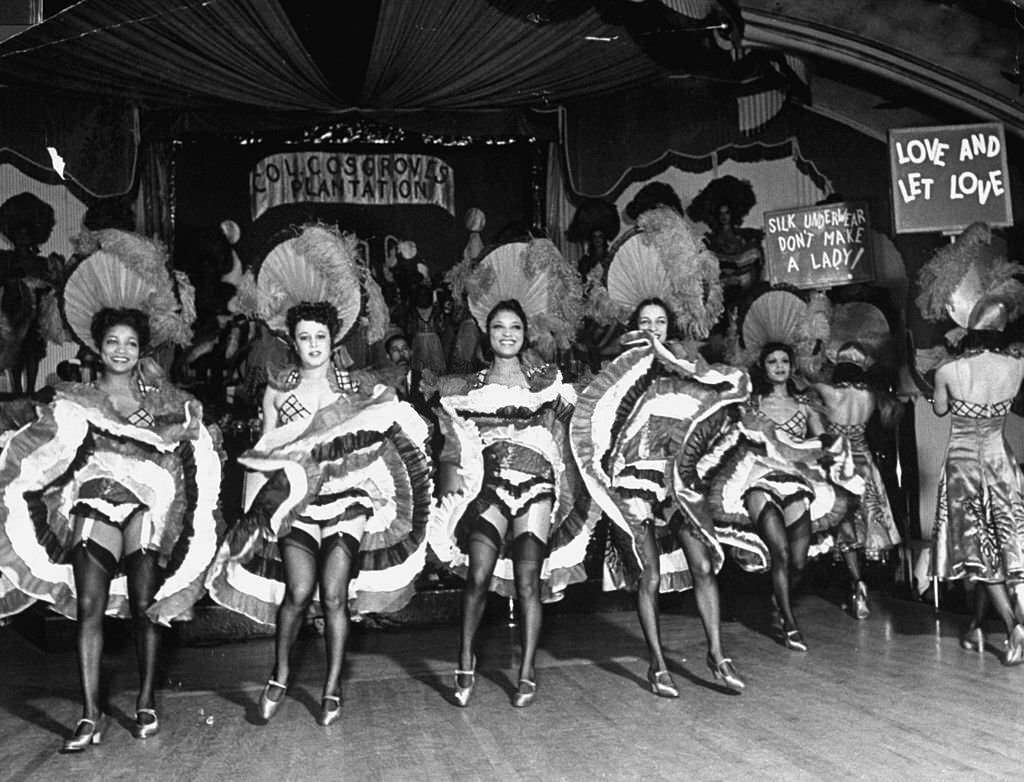
Feathered headpieces rise like plumes above a tight chorus line as dancers lift their ruffled skirts in the cancan’s signature flourish at the Cotton Club. Legs and lace form crisp, repeating patterns across the stage, the performers’ smiles aimed straight out toward the audience as if daring the room to keep up. Behind them, more showgirls and bandstand bustle fill the background, turning the scene into a layered snapshot of nightclub spectacle.
Stage signage adds a sly, vaudeville edge, with playful phrases hanging over the action while the choreography stays precise and athletic. The costumes—high heels, stockings, and tiered skirts built for dramatic kicks—signal the demanding physicality that made the cancan famous, where stamina mattered as much as glamour. Even in a still frame, the rhythm feels present: a synchronized line poised between a kick, a turn, and the next laugh from the crowd.
Cotton Club imagery like this has become shorthand for an era when nightlife, jazz culture, and theatrical dance fed one another in dazzling, carefully staged numbers. The photograph highlights how chorus-line entertainment balanced uniformity and individuality, letting each performer project personality while moving as one. For anyone searching the history of the cancan, showgirls, and classic nightclub fashion, this scene preserves the high-energy allure that made such performances unforgettable.