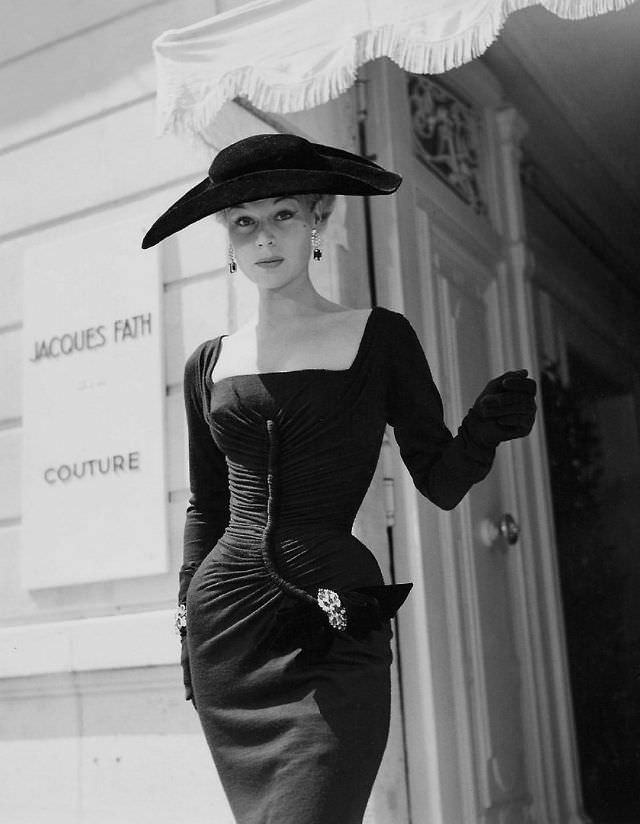
Outside the couture house, Stella pauses in the doorway with the quiet assurance of a mid-century model, framed by bright exterior walls and a shaded interior beyond. A sign reading “Jacques Fath” and “couture” anchors the scene in the world of Paris fashion, while the angle and lighting give the moment the feel of a candid departure after a fitting. Her gaze is steady, meeting the camera as if to confirm the evening’s promise.
The dinner or cocktail dress is pure 1950s elegance: a sculpted, figure-hugging silhouette with a structured neckline, long sleeves, and a tightly gathered bodice that draws the eye down the center seam. A dramatic, wide-brim hat tilts low, adding mystery, and dark gloves reinforce the formal tone, while sparkling accents at the hips catch the light like jewelry. Together, these details suggest Jacques Fath’s flair for high-impact glamour—refined, theatrical, and designed to be remembered.
Fashion and culture meet in the way the photograph balances couture branding with the model’s poised performance, turning a simple threshold into a stage. The setting hints at the rituals of the American modeling world abroad: fittings, showings, and the careful construction of an image that could travel from salon to magazine page. In 1953, this kind of portrait helped define the era’s ideal of sophistication—sleek black fabric, precise tailoring, and a sense of nightlife waiting just out of frame.