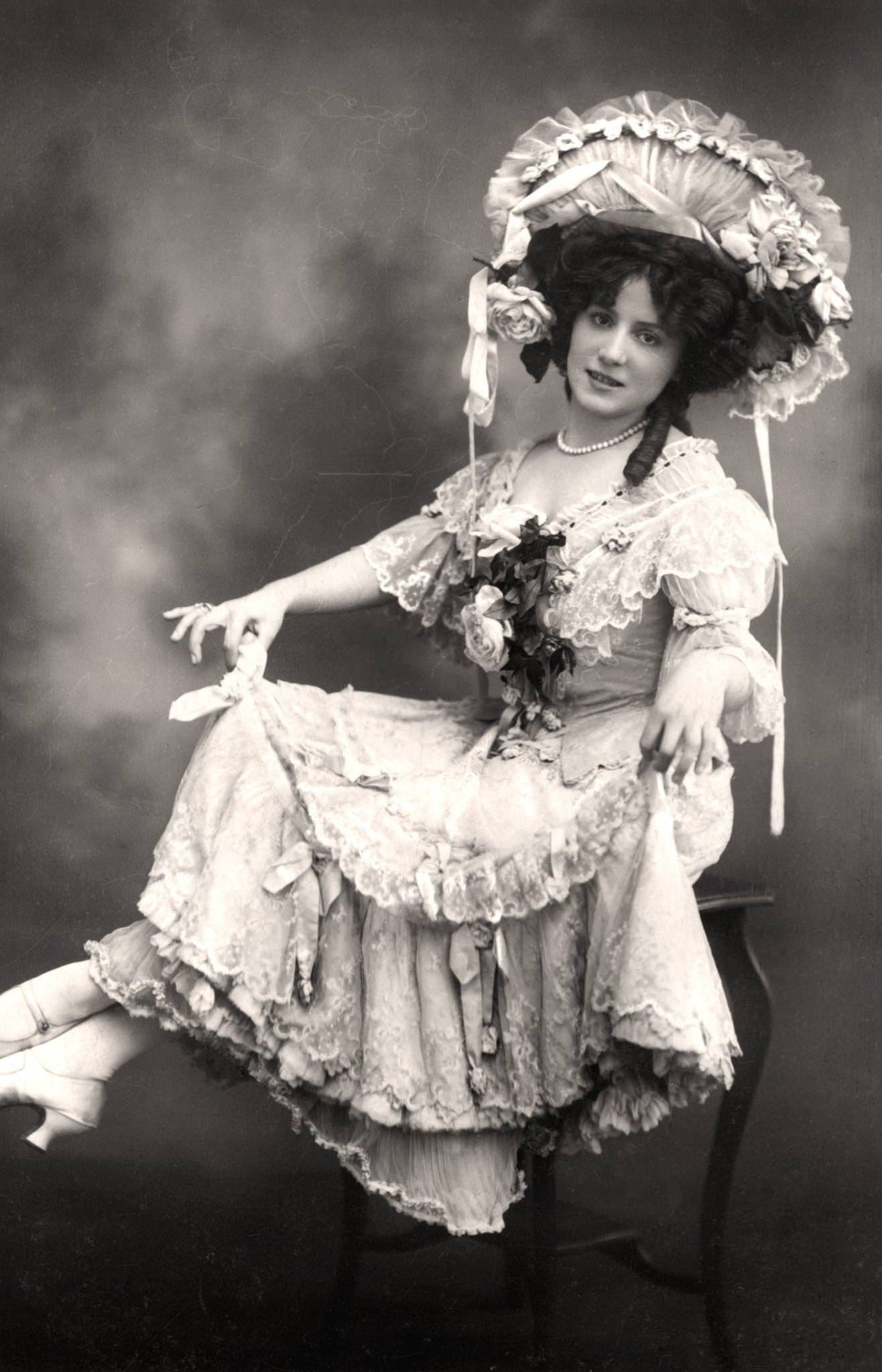
Fanny Dango leans into the camera with an easy, practiced poise, her gaze direct and slightly amused as she sits sideways on a studio chair. A dramatic Edwardian hat—wide, airy, and crowned with ribbons and clustered flowers—frames her dark, curled hair, turning her head into a carefully staged centerpiece. The soft, blurred backdrop keeps attention on her expression and the theatrical silhouette created by hat, hair, and neckline.
Lace and ruffles spill across her dress in layered tiers, catching light in delicate patterns that photographers of the early 1900s loved for their texture. A short strand of pearls rests at her throat, while floral adornments trail down the bodice, echoing the blossoms perched above. Even her posture reads like performance: one arm draped with relaxed confidence, the other hand lifting fabric to display the ornate trim, finishing with buttoned boots that peek from beneath the hem.
Portraits like this were more than personal keepsakes; they were fashion statements and cultural signals, recording how women presented modernity, refinement, and individuality in the Edwardian era. The hat in particular speaks to an age when millinery defined an outfit, its scale and ornament announcing taste and social aspiration as clearly as any jewel. Seen today, the photograph serves as a vivid reference for early 20th-century women’s fashion, studio photography, and the enduring allure of carefully constructed style.