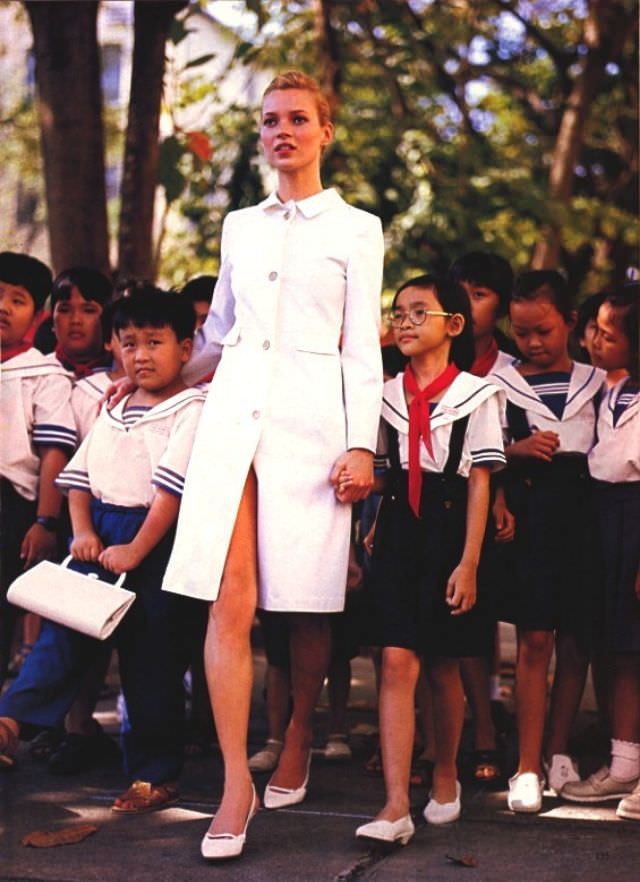
Sunlight filters through dense greenery as Kate Moss steps forward with a poised, almost cinematic calm, her pale coatdress cutting a sharp silhouette against the humid, leafy backdrop. The tailored look—crisp buttons, clean collar, and a high hemline that reveals a long stride—feels intentionally out of place in the street scene, heightening the editorial tension between polished fashion and everyday life. A structured white handbag and matching heels complete the stark, monochrome statement.
Around her, a cluster of schoolchildren in sailor-style uniforms gathers close, their red neckerchiefs and dark skirts adding rhythm and contrast to the frame. Moss holds hands with one child, turning the moment into a guided procession rather than a distant runway pose, while other faces look on with curiosity, uncertainty, or quiet amusement. The crowding bodies and soft motion blur suggest a real environment—public, warm, and slightly chaotic—rather than a sealed studio fantasy.
Borrowing the mood of “Good Morning Vietnam,” Bruce Weber’s Vogue US shoot leans into a travelogue energy: tropical foliage, street-level encounters, and a gloss of 1990s fashion storytelling that blurs reportage and role-play. The styling’s bright whites and minimalist lines read as deliberate provocation against the lush setting, creating a memorable fashion-and-culture tableau that still ranks among the era’s most talked-about editorial images. In the end, the photograph sells more than clothing; it sells atmosphere, tension, and the lingering question of what it means to stage glamour in the middle of ordinary life.