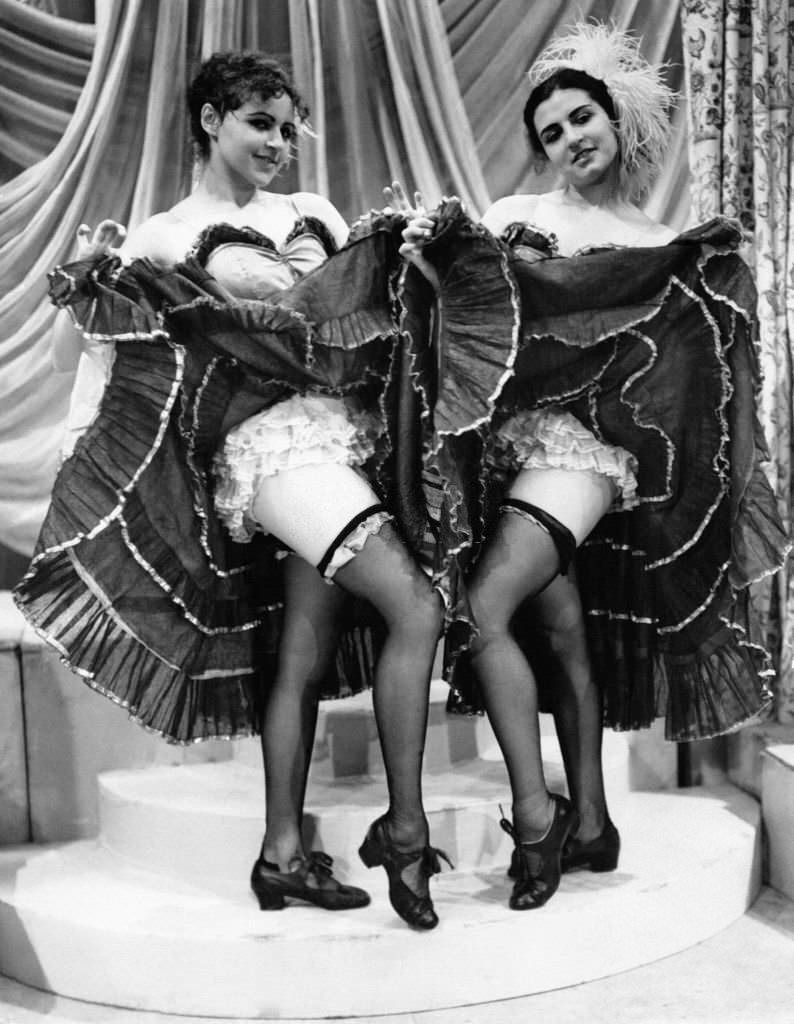
Under the sweeping stage drapery at Alexandra Palace, two performers—Menes and Desta—hold their cancan skirts wide, turning fabric into a frame for the dance’s famous high kicks and teasing flourishes. The rehearsal pose is both playful and practiced, with lifted hems revealing layered petticoats, dark stockings, and sturdy character shoes built for fast footwork rather than delicate display. Even at rest, their posture suggests motion, the kind of controlled energy that defines the cancan’s show-stopping rhythm.
Costume details do much of the storytelling: ruffled underskirts, decorative trim, and a feathered headpiece evoke the cabaret tradition while reflecting mid-20th-century stage glamour. The set’s curved platform and heavy curtains hint at a variety-theatre environment where spectacle mattered, yet the dancers’ expressions keep the scene grounded in the reality of rehearsal—timing, balance, and stamina rehearsed again and again. This is a moment when choreography becomes craft, captured between performance and preparation.
Dated November 16, 1948, the photograph sits within a postwar entertainment world hungry for color, comedy, and exuberant dance. Cancan history often emphasizes its daring spirit, but images like this underline the physically demanding discipline behind the flirtation—legs lifted high, skirts managed precisely, smiles held through strain. For searches tied to Alexandra Palace, 1940s British stage culture, and the evolution of the cancan, this frame offers a vivid reminder that showmanship is built in rehearsal rooms as much as under bright lights.