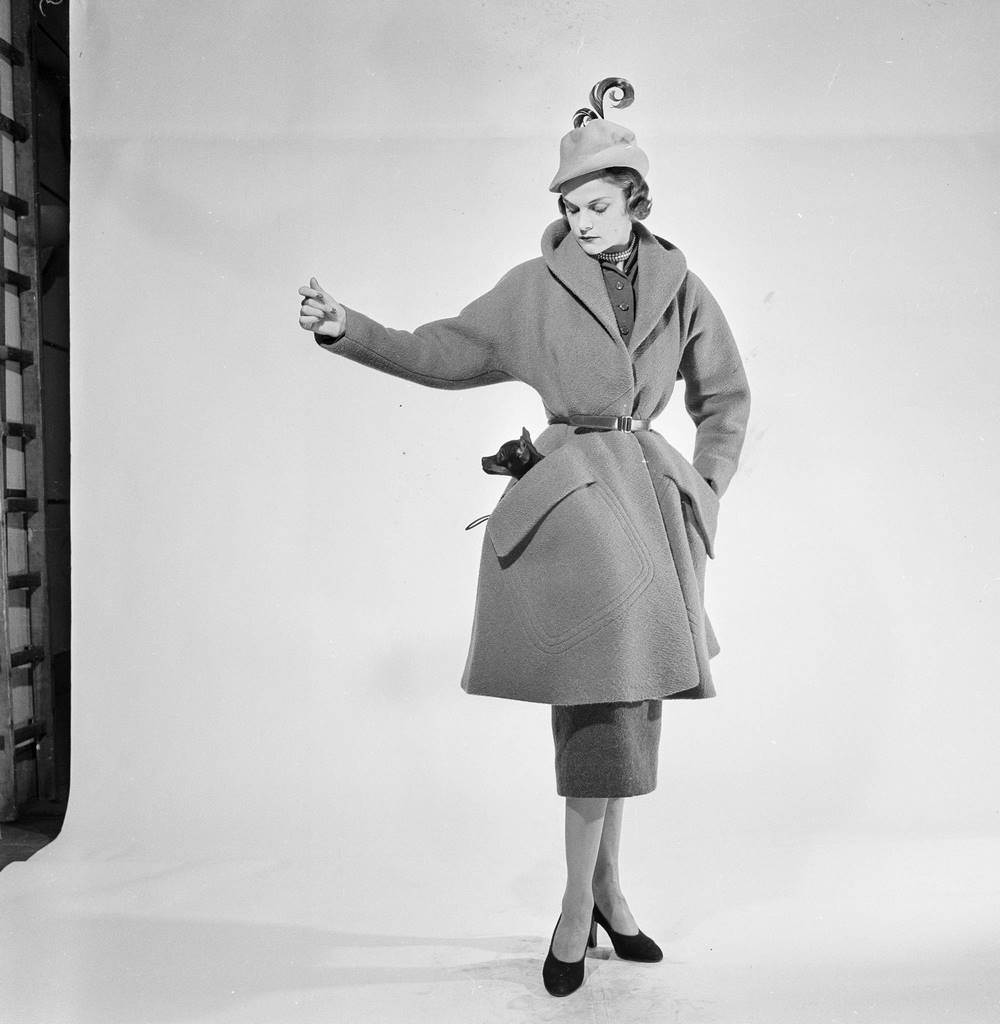
Poised against a stark studio backdrop, a model presents an Autumn–Winter 1950/1951 look from the “Couturiers Associés” fashion collection, her stance halfway between a step and a turn as if inviting the viewer to study the cut. A sculpted hat with a curled flourish crowns softly waved hair, while a dark, buttoned underlayer and a close choker-like detail at the neck frame the face with deliberate restraint. The overall effect is polished and controlled, a classic mid-century fashion photograph designed to emphasize silhouette over setting.
The coat itself is the star: broad, rounded lapels sweep into a nipped waist held by a narrow belt, then release into a structured flare that reads as both practical outerwear and couture statement. Deep pockets and pronounced seam lines guide the eye across the garment’s volume, suggesting careful tailoring meant to move elegantly rather than simply hang. Below the hem, a slim skirt and dark pumps complete a refined daywear ensemble suited to cold-season streets and formal appointments alike.
Seen through the lens of fashion and culture, the image reflects the early-1950s appetite for disciplined glamour—clothes that signaled modern confidence while keeping to a dignified, ladylike code. The clean studio lighting and minimal props turn the outfit into a document of design: proportion, texture, and the quiet drama of outerwear. For readers exploring Jacques Fath and his era of influential collections, this photograph offers a vivid window into how couture presented itself at mid-century—through line, stance, and the promise of impeccable craftsmanship.