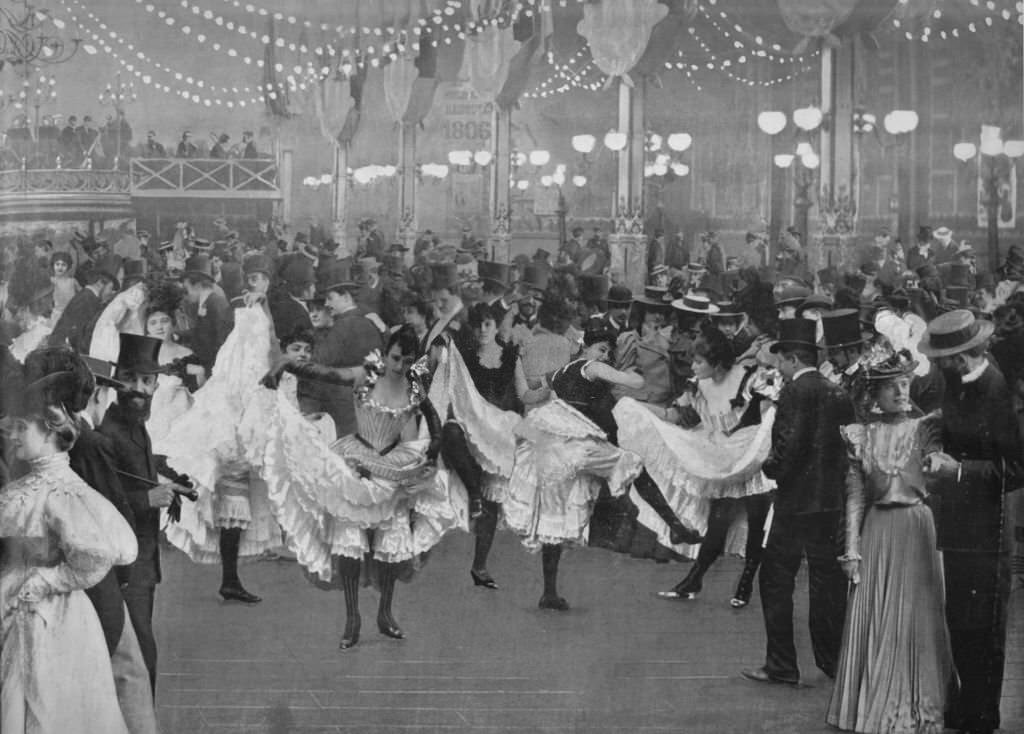
Under a canopy of electric lights and festooned garlands, a packed dance hall swirls with movement and spectacle, the air thick with smoke, music, and chatter. In the foreground, performers lift and fan out ruffled petticoats in the unmistakable flourish of the cancan, their legs kicked high as the crowd presses in to watch. The title, “Le Bal Du Moulin-Rouge’, 1900,” anchors the scene in the exuberant nightlife culture that made this kind of entertainment a symbol of modern urban pleasure.
Top hats, dark suits, and neatly trimmed mustaches cluster beside women in elaborate dresses and wide-brimmed hats, creating a vivid contrast between respectable fashion and stage daring. The dancers’ costumes—layered skirts, stockings, and heeled boots—highlight the physical demands of the routine, where athleticism and theatricality meet in a blur of fabric and limbs. Along the edges, onlookers lean forward, forming a ring of attention that turns the floor into a living stage.
Beyond its excitement, the photograph serves as a window into turn-of-the-century fashion and social mingling, when leisure venues offered new ways to see and be seen. The bright interior lighting, the dense crowd, and the choreographed chaos speak to a city embracing modernity, commerce, and mass entertainment all at once. For anyone searching the history of the cancan, Paris nightlife, or Belle Époque culture, this moment captures the era’s blend of glamour, provocation, and communal revelry.