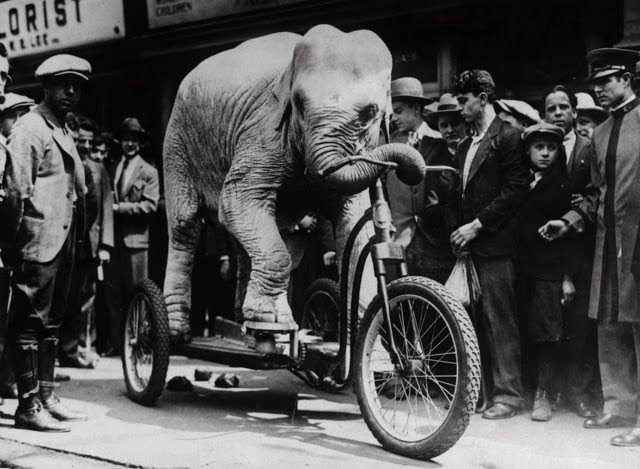
Crowds press in along the curb as a vaudeville elephant steadies itself atop a specially built tricycle, its front wheel towering like a bicycle tire enlarged for spectacle. The animal’s trunk curls forward toward the handlebars, and the platform under its feet hints at the careful engineering required to turn sheer weight into a comedic stunt. Suited onlookers and a few children stare with a mix of amazement and caution, turning the street into an impromptu stage.
Vaudeville thrived on novelty acts that could stop passersby cold, and animal performers were marketed as living proof that anything could be trained, tamed, and made entertaining. The tricycle—part prop, part publicity machine—speaks to an era when theaters competed fiercely for attention, and a single striking photograph could sell tickets as effectively as a poster. In 1918, such scenes also offered a bright distraction, inviting audiences to laugh at the impossible made briefly ordinary.
Look closely at the faces around the performer: curiosity, delight, and disbelief mingle in a tight semicircle, suggesting how public entertainment spilled out beyond the theater doors. For collectors of historical photos, circus history, and early 20th-century American vaudeville, this image is both funny and revealing—showing the mechanics, the crowd, and the culture that elevated spectacle into a shared urban experience. It remains an unforgettable snapshot of showmanship, ingenuity, and the complicated fascination that surrounded animal acts in popular entertainment.