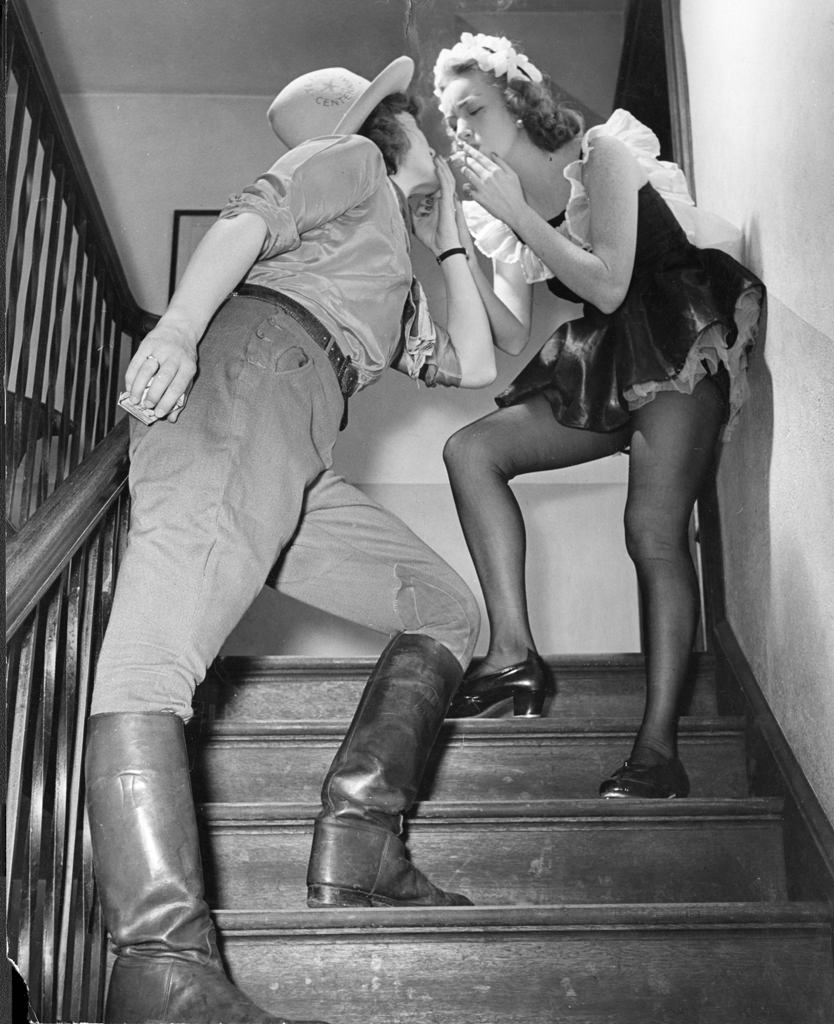
Halfway up a narrow stairwell, two women lean in close, trading a light and a laugh as cigarette smoke curls through the cramped space. One wears a brimmed hat and tall boots with a rolled-sleeve shirt, striking a playful, almost theatrical pose against the railing; the other, dressed in a short, frilly party outfit with a floral headpiece, balances on the steps with the confidence of someone in on the joke. The candid angle and the tight interior setting give the moment a backstage feel—less formal portrait, more lively snapshot from a busy gathering.
The title points to Connecticut in 1941 and an old-fashioned “smoker,” a word that once meant a social event built around cigars, cigarettes, conversation, and club-style camaraderie. Seen through that lens, the humor lands: these are GOP women adopting a tradition long coded as masculine, turning it into a costume-y, tongue-in-cheek performance while still enjoying the rituals of the era. It’s a small but telling glimpse of how women’s political organizations mixed fundraising, networking, and social entertainment in the years just before America’s wartime mobilization reshaped daily life.
Details like the polished wooden steps, the sturdy banister, and the mix of workwear and party dress help date the atmosphere even when exact names and venues aren’t provided. For readers hunting for a funny 1941 political photo, women in Republican Party history, or the quirky social customs behind the term “smoker,” this image offers an irresistible conversation starter. It’s the kind of scene that reminds us politics has always had its informal side—where humor, performance, and community mattered as much as speeches.