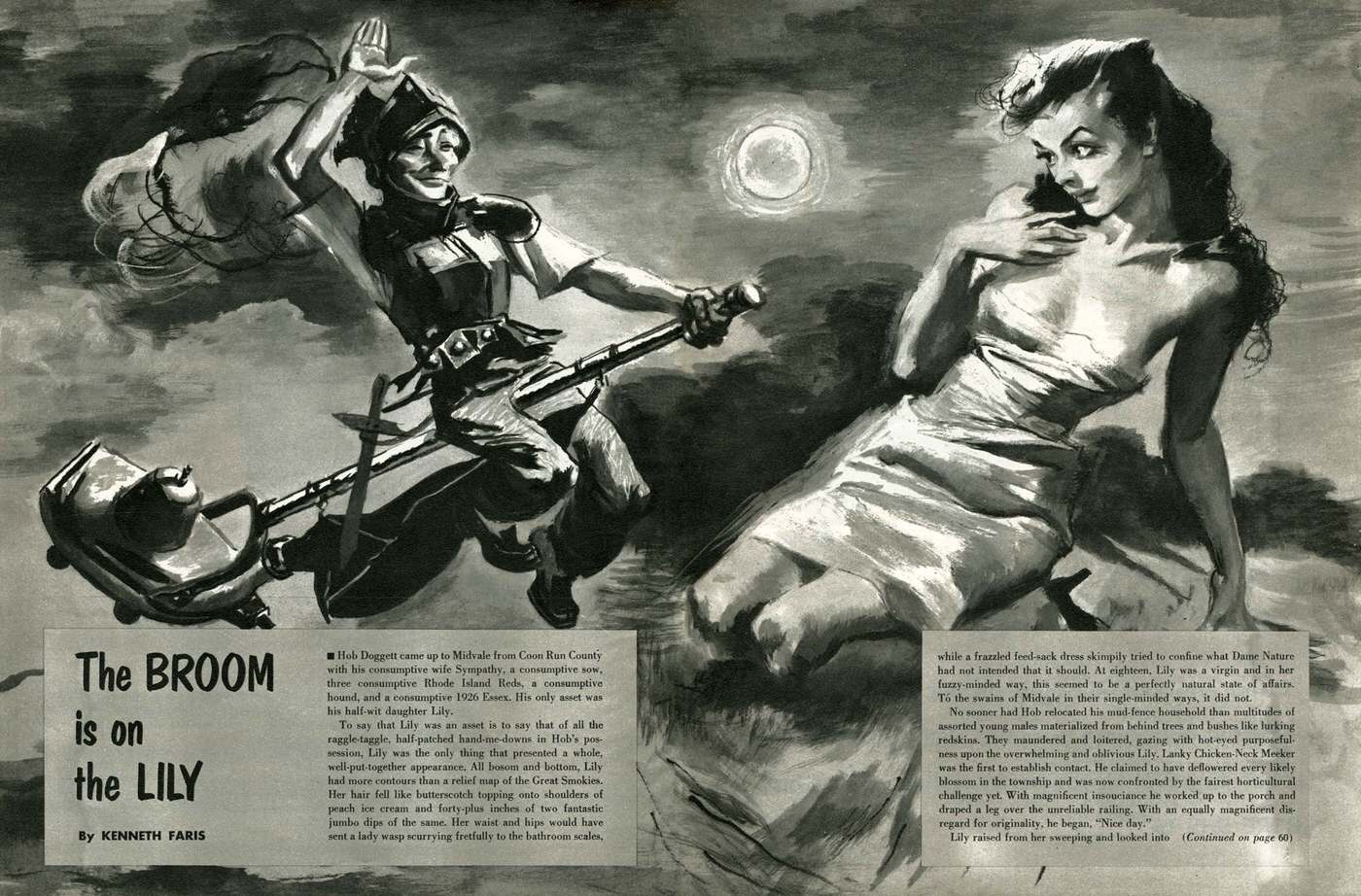
A moonlit illustration sets the stage: a glamorous woman in a clinging dress reclines in the foreground, while a helmeted rider bursts across the scene with a broom-like lance, the whole thing rendered in dramatic shadows and pulpy ink. At the bottom, the printed panel reads “The BROOM is on the LILY,” complete with story text and a byline, instantly placing this as a piece of old-school magazine or catalog-era entertainment where sensational imagery was part of the sales pitch.
Look closer and the title’s joke starts to sharpen—because “broom” and “lily” aren’t just props here, they’re a wink. Vintage ads, comics, and serialized fiction often relied on suggestive phrasing, coy innuendo, and knowing visual jokes that could slide past polite expectations while still grabbing attention on a crowded newsstand. The contrast between romance, peril, and flirtation is the hook, and it’s exactly the kind of double-meaning wordplay that makes these throwbacks feel surprisingly modern.
Nostalgia can be misleading: what reads as “innocent” at first glance often carries a second layer shaped by the slang, humor, and marketing tactics of its time. This post digs into that sweet spot where retro illustration, vintage typography, and cheeky subtext collide—perfect for anyone who loves classic print culture, old advertisements, and the accidental (or not-so-accidental) comedy hidden in plain sight. If you’re hunting for funny vintage comics and ads with surprising double entendres, this is the kind of artifact that delivers a grin and a history lesson at once.