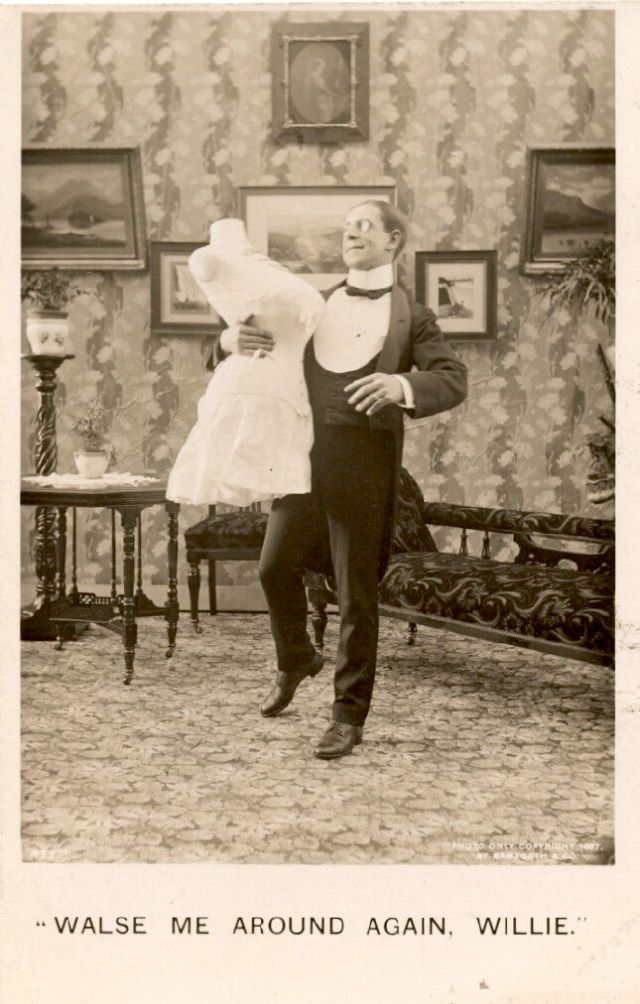
Laughter is practically built into the scene: a formally dressed man in a tuxedo steps forward as if mid-waltz, grinning while he “leads” a headless dress form in a light-colored frock. The playful caption, “Walse me around again, wille,” leans into the joke with intentionally off-kilter spelling, turning what could have been a stiff studio pose into a comedic performance. It’s the kind of staged humor that reminds us how earlier generations loved a visual gag just as much as we do.
Behind the joke sits a richly decorated interior, with patterned wallpaper, framed pictures arranged across the wall, and a long upholstered settee anchoring the room. A small table and lamp complete the domestic setting, giving the impression of a parlor or sitting room where guests might gather—exactly the sort of place where music, dancing, and lighthearted entertainment would fit. The careful props and furnishings suggest that this isn’t a casual snapshot but a deliberately composed photograph meant to be shared and enjoyed.
“Walse me Around again wille” works today as both a quirky historical photo and a window into vintage comedy, gendered fashion, and social rituals like the waltz. The mannequin partner exaggerates the romance of the dance into something absurd, while the man’s confident posture sells the punchline. For anyone browsing old postcards, theatrical studio portraits, or early humorous photography, this image offers an instantly memorable example of how timeless a good bit of silliness can be.