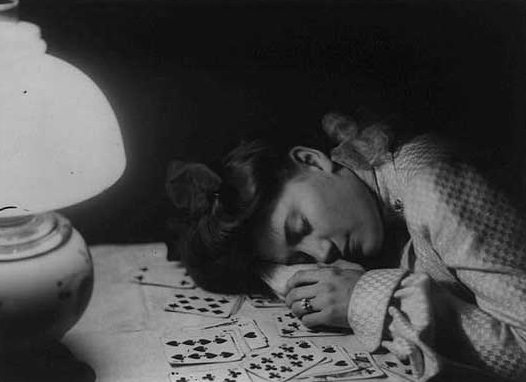
Lamplight pools across a tabletop littered with playing cards, while the so-called “card shark” can’t keep his eyes open any longer. His head is turned into the crook of his arm, cheeks pressed down as if sleep arrived mid-hand and refused to wait. The contrast between the bright lamp and the surrounding darkness turns a small, ordinary scene into a little stage for exhaustion and humor.
Spread in a loose scatter, the deck’s faces—clubs, spades, hearts, and diamonds—suggest a game that ran late and maybe ran too long. The man’s rumpled clothing and slack posture read like the aftermath of concentration, bluffing, and boredom all at once, an unglamorous counterpoint to the legend of the fearless gambler. Even without a visible poker table crowd, you can almost hear the quiet: the last conversation fading, the lamp hissing softly, the moment someone finally nods off.
Titled “A tired card shark, 1904,” the photo works as both comedy and character study, capturing the wry truth behind card-playing bravado. For readers searching historical gambling photos, early 1900s social life, or vintage scenes of everyday leisure, it offers a memorable glimpse into how people entertained themselves—and how the night sometimes won. The joke lands gently, but the humanity lingers: fatigue, familiarity, and a table full of stories left unfinished.