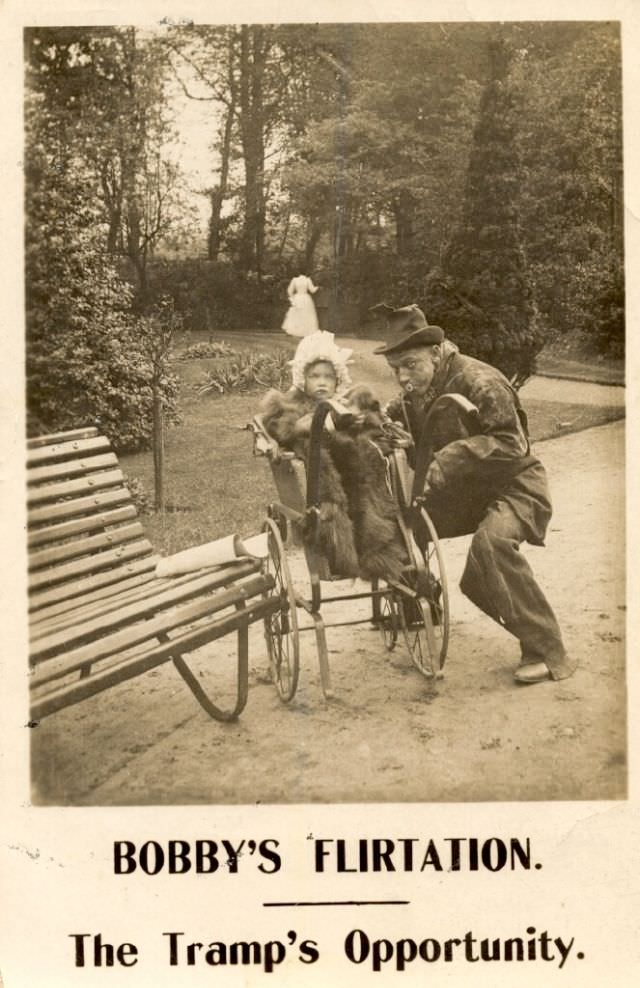
A mischievous street-comedy unfolds on a quiet park path: a scruffy, hat-tipped tramp leans in toward a baby carriage, grinning as if he’s found his moment. The pram’s large spoked wheels and the neatly kept grounds hint at an era when public parks were both promenades and stages, perfect for a quick gag captured in sepia tones. Off to the side, a slatted bench sits empty, as though the viewer has just arrived an instant too late to intervene—or to laugh first.
The printed caption, “Bobby’s Flirtation — The Tramp’s Opportunity,” frames the scene like a silent-film intertitle, inviting us to read expressions and posture as punchlines. The humor rests in the contrast between the tramp’s exaggerated confidence and the everyday innocence of the setting, turning an ordinary stroll into a cheeky, theatrical moment. Even without dialogue, the image plays with class and manners, relying on visual storytelling that audiences of early popular photography would have recognized instantly.
For collectors and history lovers, this photograph offers more than a quick joke: it’s a snapshot of how entertainment, satire, and public life blended in turn-of-the-century visual culture. Details like the carriage design, the clothing silhouettes, and the landscaped walkway make it a rich reference point for anyone researching vintage humor postcards, early social commentary, or park life in historical imagery. If you’re drawn to the lighter side of the past, “Bobby flirtation the tramp’s opportunity” delivers a funny premise with plenty of period texture to linger over.