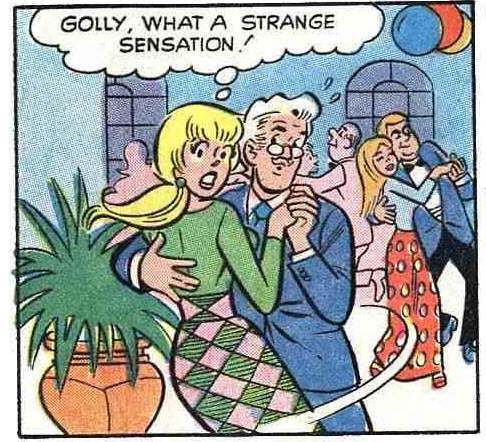
Leaning into a dance-floor embrace, a blond young woman in a green top and patterned skirt looks startled as her partner pulls her close, while a thought bubble above him reads, “GOLLY, WHAT A STRANGE SENSATION!” The scene plays like a gag and a confession at once, using exaggerated facial expressions and body language to telegraph the joke in a single beat. With balloons and partygoers in the background, the panel sets its flirtation inside a familiar social setting where innuendo can hide in plain sight.
Few pop-culture brands navigated changing attitudes with as much elasticity as Archie-era humor, and the 1970s often pushed that elasticity a little further. The clean lines, bright colors, and cheeky dialogue keep the tone light, yet the framing lingers on closeness and surprise in ways earlier decades tended to soften or sidestep. For readers hunting the “lusty pages” vibe in a mainstream funny, this kind of moment shows how a playful comic could tiptoe toward heat without abandoning its wide audience.
For a WordPress post about Archie Comics and 1970s comedy, this image works as a tidy snapshot of the era’s balancing act: wholesome party decor on one side, slightly charged physical comedy on the other. It invites a closer look at how artists signaled desire through pose, proximity, and punchline rather than explicit content, keeping everything safely within the language of jokes. Fans of vintage comic art, retro humor, and the evolution of flirtation in classic American comics will recognize why these panels still spark curiosity today.