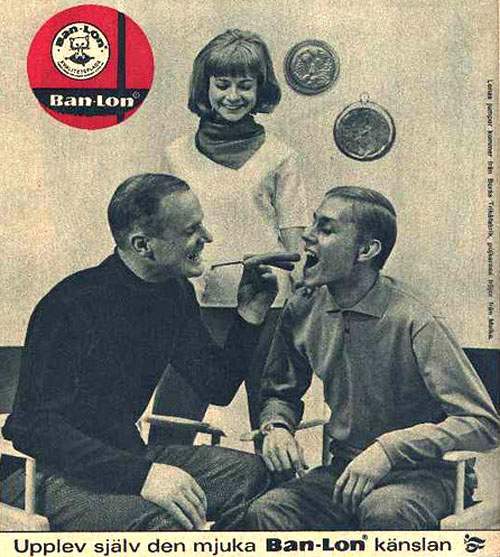
A smiling trio stages a cozy little scene that’s clearly meant to sell comfort—yet it lands today with the kind of accidental comedy only old advertising can deliver. The bold “Ban-Lon” logo hovers above, while Swedish copy along the bottom (“Upplev själv den mjuka Ban-Lon känslan”) invites readers to “experience the soft Ban-Lon feeling” in a way that modern eyes can’t help but read twice. Between the clean composition and the earnest expressions, the ad perfectly fits the theme of innocent-or-not double meanings hidden in mid-century print culture.
Front and center, two men sit close, one leaning in with a finger near the other’s open mouth, as if offering a taste, checking a tooth, or just teasing—ambiguous enough to spark a dozen interpretations. A woman stands behind them, smiling like a satisfied presenter, reinforcing that this is supposed to be wholesome lifestyle marketing rather than anything suggestive. The sweaters and tidy styling do the heavy lifting: knitwear as modern, soft, and sociable, packaged in a “funny old-school ads” way that plays differently across generations.
What makes this kind of vintage catalog and magazine ephemera so fascinating is how easily intention and reception drift apart over time. Copywriters once chased warmth, intimacy, and “softness” to sell clothing; audiences now spot innuendo, awkward staging, and unintentional meme energy. If you collect retro ads, classic comics, or mail-order curios, this Ban-Lon moment is a reminder that history isn’t just documented—it’s reinterpreted, one raised eyebrow at a time.