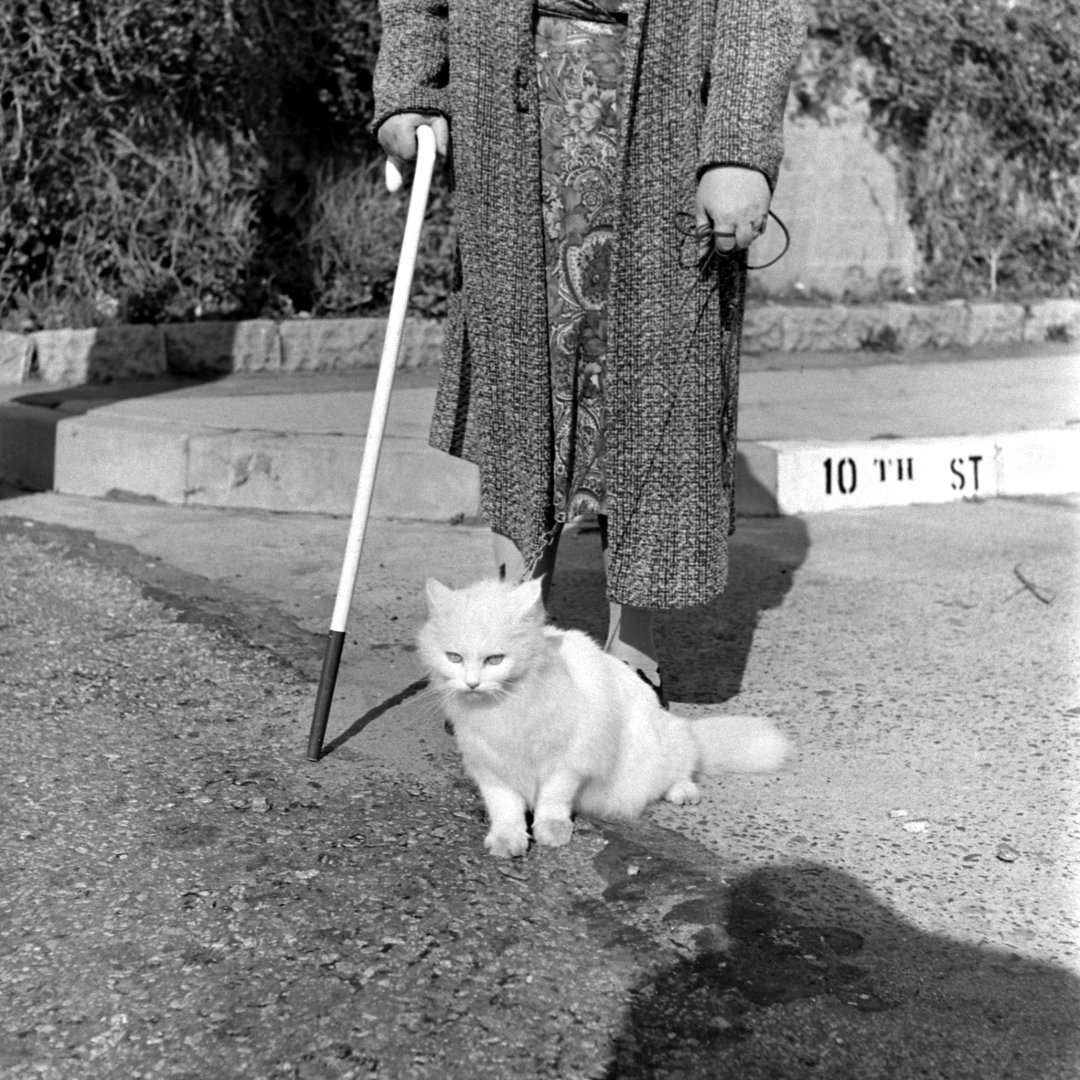
A fluffy white cat sits squarely at the edge of a curb, posed with the calm, unimpressed air only cats seem to master. Behind it, a person stands with a white mobility cane angled toward the street, and the scene’s humor lands instantly: “Baby,” the so-called Seeing Eye Cat of 1947, looks far more interested in holding court than guiding anyone anywhere. The crisp contrast of the photograph emphasizes texture—the cat’s pale coat against rough pavement, the tweed-like weave of the long coat, and the patterned dress peeking through.
On the curb in the background, the street marking “10TH ST” anchors the moment in everyday city life, where a simple corner could become a stage for a novelty headline. The cat’s placement right at the drop from sidewalk to road invites the viewer to imagine the intended joke: a guide animal that’s small, stubborn, and blissfully indifferent. Whether staged or candid, the image leans into mid-century whimsy—an era when newspapers and photo agencies loved oddball animals, clever captions, and lighthearted human-interest stories.
What makes this historical photo linger isn’t just the gag; it’s the glimpse of period street design, clothing, and the familiar presence of the white cane as a symbol of independent travel. “Baby The Seeing Eye Cat, 1947” works beautifully as a quirky piece of social history, blending humor with an incidental record of how people and cities moved through the world. For collectors of vintage photography, animal curiosities, or mid-century Americana, it’s the kind of snapshot that keeps sparking conversation long after the shutter clicked.