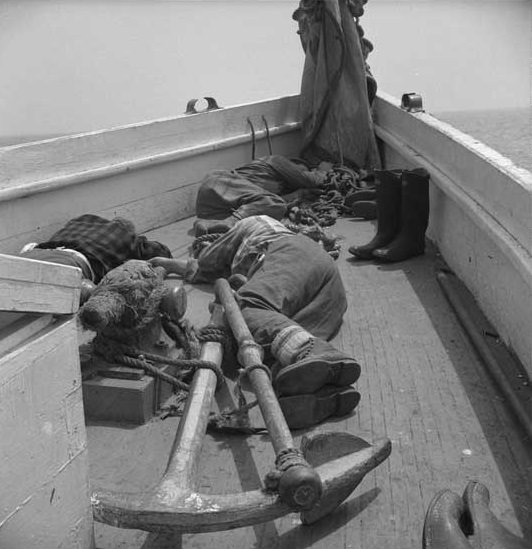
On the open deck of a Gloucester, Massachusetts fishing boat in 1943, a few exhausted hands have surrendered to sleep wherever there’s room—curled against the low rail, jackets bunched as makeshift pillows, faces turned away from the glare off the water. The humor in the scene is immediate, but it’s the unguarded stillness that lingers: a brief truce between body and labor, taken in plain view of nets, lines, and the hard geometry of the working vessel.
Details on deck tell the fuller story of the job. A heavy anchor lies diagonally in the foreground, oars and gear rest in a rough scatter, and a pair of tall rubber boots stand upright like sentries beside coiled rope and canvas. Everything looks used, practical, and close at hand—tools arranged not for neatness, but for speed when the next call comes.
Gloucester has long been synonymous with commercial fishing, and images like this help explain why the town’s maritime history feels so tangible. These fishermen napping on deck embody the rhythms of a working waterfront: long hours, cramped quarters, and stolen moments of rest that arrive without ceremony. For anyone searching for Gloucester fishermen photos, 1940s New England coastal life, or authentic snapshots of American maritime labor during World War II–era years, this candid scene offers both grit and grace in the same frame.