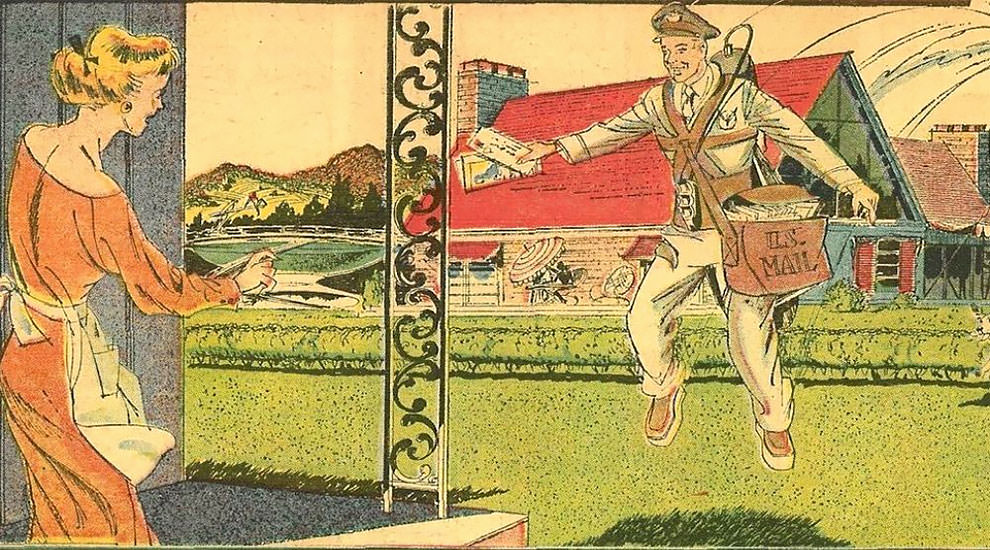
Optimism about tomorrow leaps off the page in “Jetpack Mailmen,” a playful illustration of a postal worker hovering above a tidy yard, letter in hand, as if gravity has finally been negotiated away. A cheerful “U.S. MAIL” bag swings at his side, and the little rocket pack on his back sends a bright plume behind him, turning an everyday delivery into a stunt worthy of a science magazine cover.
Across the porch, a woman pauses mid-task to watch the airborne arrival, her posture caught between surprise and delight. The scene is framed like a slice of suburban life—trim lawn, fence line, and a red-roofed house in the background—yet the absurd convenience of jet-assisted mail makes it feel like a wink at the reader: the future is coming, and it’s wearing a uniform.
As a piece of retro futurism, the image speaks to a period when technology was expected to streamline everything, even the simple ritual of receiving a letter. It’s funny, yes, but it also serves as a charming reminder of how people once imagined faster communication: not through invisible signals and screens, but through daring machines that made the neighborhood itself a runway. For anyone interested in vintage postcards, mid-century futurist art, or the history of mail delivery fantasies, this one delivers.