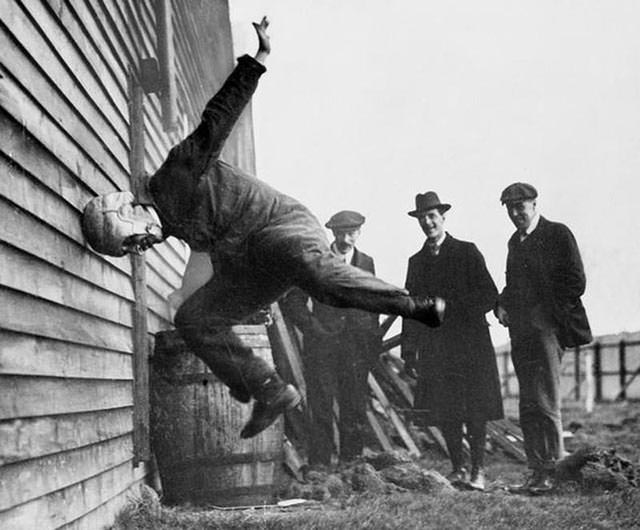
A man in everyday work clothes is caught mid-collision, flung sideways into the clapboard wall of a wooden building while a small group of onlookers in caps and hats watches with amused attention. The helmet on his head—bulky and bright against the darker tones—turns the moment into a kind of early laboratory test, part stunt and part serious experiment. It’s a striking snapshot of how quickly American football equipment was evolving in the early 20th century, and how informal “field trials” could look before modern safety standards.
The humor comes from the sheer physicality of it: arms splayed, legs tucked, body suspended as if the wall were a tackling dummy. Yet behind the gag is a real problem the sport faced—protecting players from impacts at a time when leather headgear was still being refined and public concern about injuries was growing. Prototype football helmets like this one were attempts to balance protection, comfort, and practicality, even if the testing methods seem rough-and-ready to modern eyes.
For readers interested in football history, sports technology, or vintage sports photography, the scene offers a vivid reminder that innovation often arrived through trial, error, and a willingness to look a little ridiculous. Details in the clothing and setting keep it grounded in its era, while the dramatic action makes it instantly shareable and SEO-friendly for searches about 1912 football helmet prototypes and early protective gear. Funny, yes—but also a small window into the tinkering spirit that helped shape the game’s equipment culture.