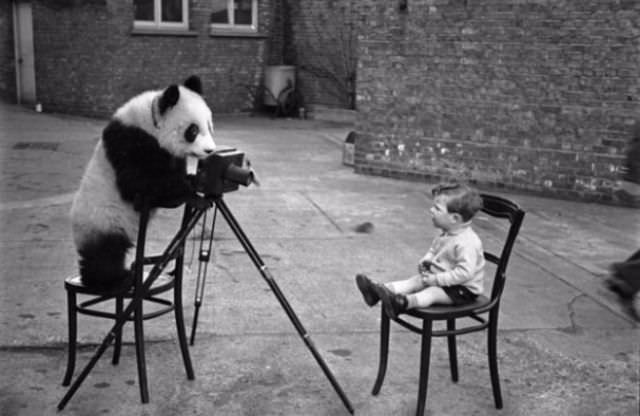
Perched on a simple chair, a giant panda leans in with uncanny concentration toward a camera set firmly on a tripod, as if it has taken up the serious craft of portrait-making. The scene is staged with just enough everyday detail—bare pavement, a brick wall, and plain windows—to make the absurdity feel oddly plausible. Its soft black-and-white tones enhance the deadpan humor, turning the panda’s round face and dark eye patches into the perfect “professional photographer” disguise.
Across from this unlikely cameraman sits a small child on another chair, posed like a patient sitter in an old studio session. The child’s legs stretch forward, hands held close, expression fixed on the panda and the imposing camera between them, creating a gentle tension between curiosity and stillness. Together, they form a charming little tableau of performance and trust, where the equipment looks authentic and the joke lands precisely because everything else is treated so earnestly.
What makes “A panda taking a picture” linger is how it plays with the language of historical photography—tripod, careful framing, and the ritual of being photographed—while inviting a laugh that feels timeless. Whether this was made for publicity, a zoo promotion, or simply a mischievous moment caught on film, it reflects an era when animals were often used to sell wonder and whimsy to the public. For readers searching for a funny vintage panda photo, a quirky animal photographer scene, or a nostalgic oddity from the early days of staged snapshots, this image is a small masterpiece of playful storytelling.