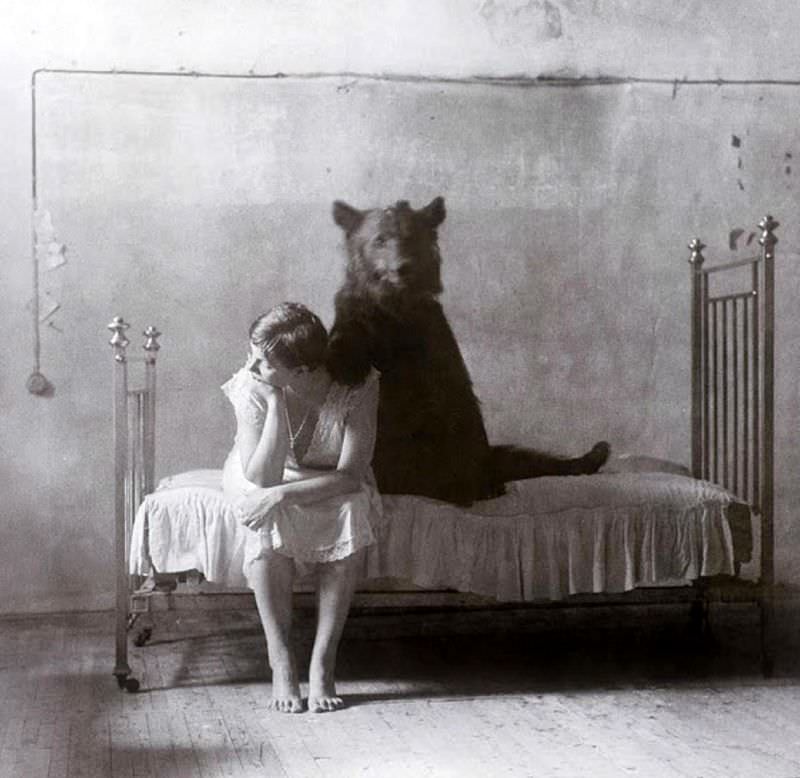
Oddly tender and a little unsettling, this circa 1912 scene places a young girl on the edge of an iron bed while a full-grown bear sits upright behind her like an oversized companion. She leans forward with a cloth to her face, bare feet on the wooden floor, as if caught mid-sigh or mid-laughter. The plain wall and sparse room keep attention fixed on the improbable pair, turning a simple interior into a stage for surprise.
The bear’s posture—calm, almost posed—suggests a trained animal rather than a wild intruder, evoking the era when traveling shows, circus acts, and novelty studio portraits blurred the line between entertainment and everyday life. Early 20th-century photographers loved a spectacle, and unusual animal photographs were irresistible proof that the modern world could deliver wonders on demand. At the same time, the girl’s quiet, withdrawn pose adds a human note that complicates the joke, hinting at nerves, patience, or the strange normality of performing for the camera.
As a historical photo, “Bear and girl, circa 1912” sits at the crossroads of curiosity and caution, reminding us how differently people once related to exotic animals in public spaces. The iron bedframe, simple dress, and worn floorboards anchor it in its period, while the bear’s looming presence keeps it timelessly memorable. For collectors of vintage photographs, circus history, or early 1900s oddities, it’s the kind of image that makes you look twice—and then start asking questions.