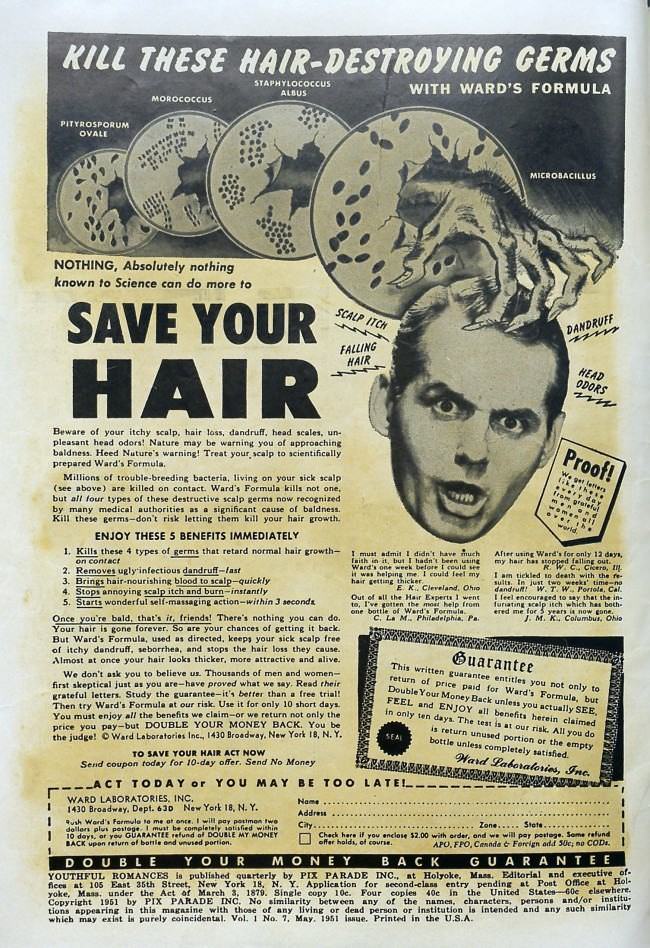
Panic and promise collide in the bold advertising artwork behind “HAIR MONSTERS!”, where enlarged petri-dish “germs” loom like cartoon villains over a worried face. The headline commands readers to “Kill these hair-destroying germs,” turning microscopic life into a dramatic, almost sci‑fi threat that anyone with an itchy scalp could imagine. It’s a perfect snapshot of how mid-century print culture blended fear, science talk, and spectacle to sell everyday remedies.
Across the page, the copy leans hard on the language of laboratories—named microbes, formulas, and proof—while pointing to familiar anxieties: dandruff, scalp itch, and falling hair. The layout does what good marketing always tries to do: overwhelm hesitation with certainty, stacking benefits, instructions, and guarantees until doubt feels unreasonable. Even without a specific time or place stated, the graphic style and sales pitch evoke the era when mail-order health-and-beauty products competed for attention in crowded magazines and newspapers.
Humor is the hook here, because the “monsters” aren’t fanged beasts at all—just magnified dots and smears given menace by typography and framing. For historians of consumer culture, this image is a vivid example of early “science-based” branding, when germ theory and medical authority were repackaged for household self-care. If you’re searching for vintage hair loss ads, dandruff cures, or classic fear-based marketing ephemera, this post offers a striking—and oddly entertaining—artifact of how people were persuaded to save their hair one bottle at a time.