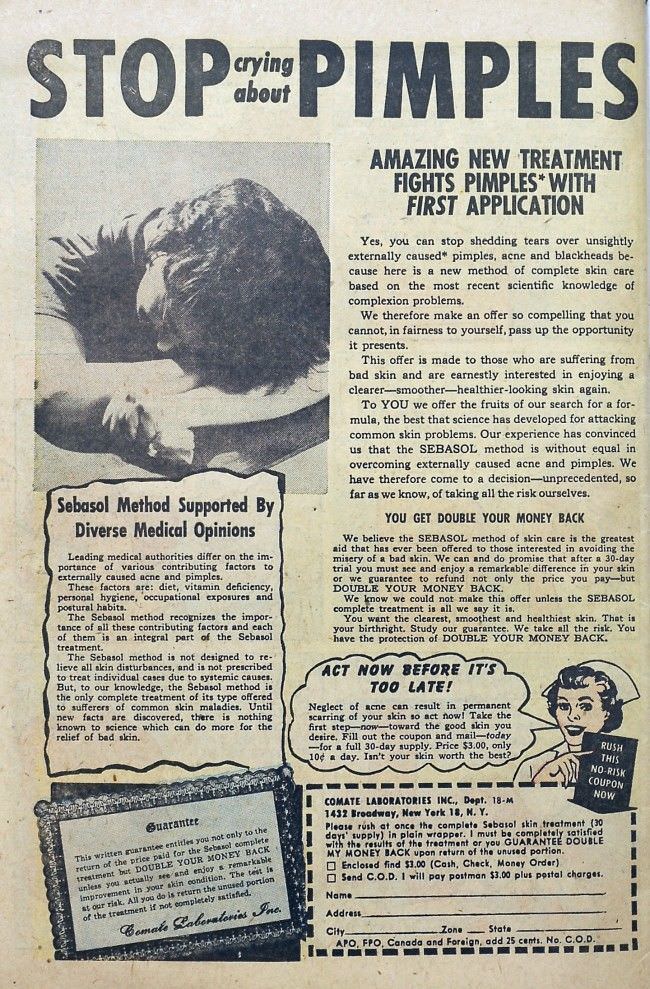
Bold typography shouts “STOP crying about PIMPLES,” framing acne as both a personal misery and a solvable modern problem in this striking old advertisement. The layout leans on urgency and reassurance at once: a moody close-up of a face at left, dense promise-filled copy at right, and a small cartoon figure at the bottom pushing readers to act “before it’s too late.” Even without a visible publication date, the tone and design evoke a mid-century style of mass-market health marketing where confidence was sold as readily as complexion care.
Across the page, the pitch hinges on authority, with the headline claim “Supported ‘By Diverse Medical Opinions’” doing heavy persuasive work. The ad talks about “scientific knowledge,” “complete skin care,” and a method that tackles “externally caused” blemishes, blending quasi-medical language with the everyday anxiety of breakouts. Phrases like “amazing new treatment,” “first application,” and “clearer—smoother—healthier-looking skin” are classic examples of how skincare advertising borrowed the cadence of clinical certainty while keeping the target squarely on appearance and social comfort.
Down at the bottom, a mail-order coupon and money-back guarantee turn the whole message into a simple transaction: clip, send, and await transformation. That promise of easy access—no appointment, no face-to-face embarrassment—helps explain why such remedies circulated so widely in newspapers and magazines, and why they often leaned on broad claims rather than verifiable specifics. As a historical artifact, this piece is a vivid window into acne treatment history, vintage skincare advertising, and the long-running tactic of using “medical opinions” to make beauty and self-esteem feel like a matter of expert consensus.